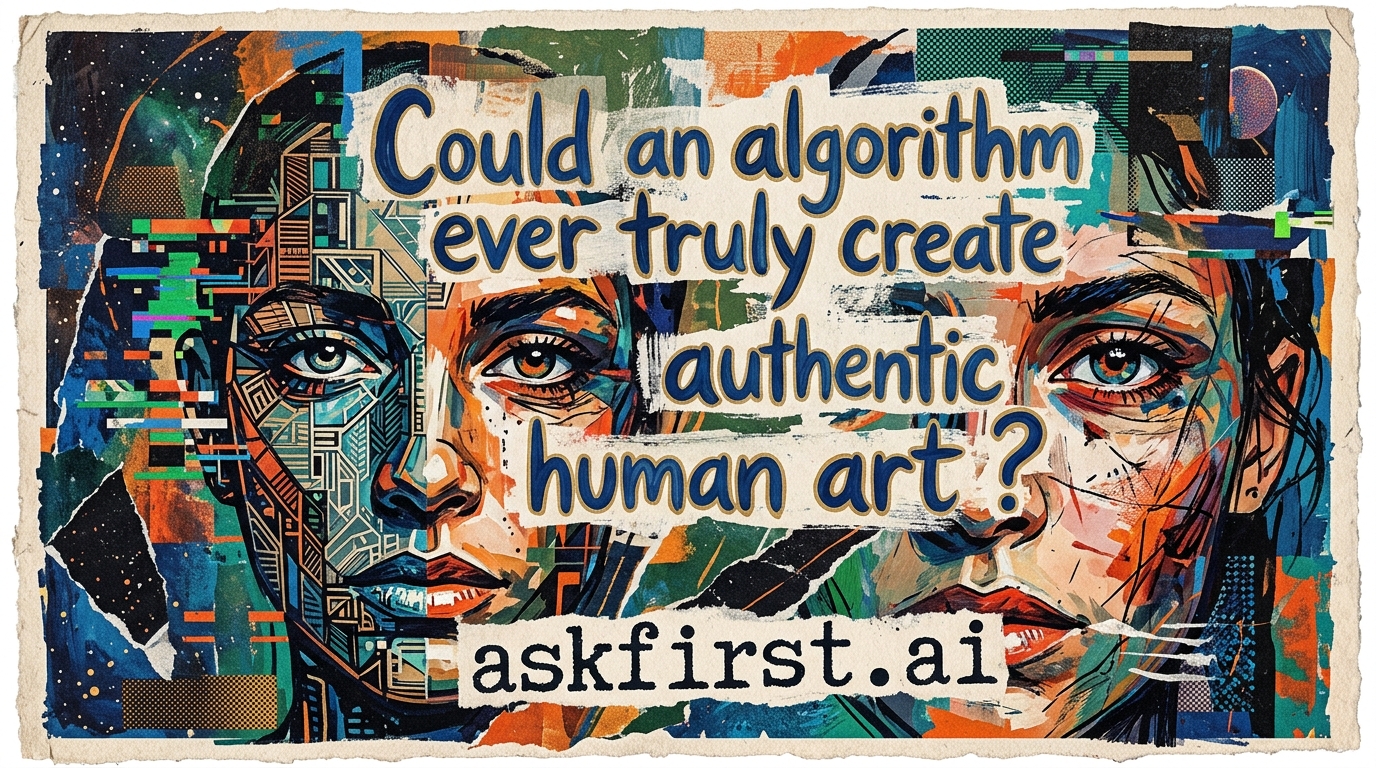
The Philosophical Horizon of Machine Creativity
To determine if an algorithm can produce authentic art, one must define the essence of human expression. Authenticity in art often stems from lived experience, emotional depth, and the intent to communicate the human condition. While algorithms excel at mimicking patterns, they currently lack the subjective consciousness required for genuine artistic creation.
The Key Distinctions
- Intent vs. Execution: Humans create art to process their internal reality, whereas machines process statistical probabilities based on existing data sets.
- Originality: True art often breaks rules to make a statement, while algorithmic generation is fundamentally anchored to past data patterns.
- Emotional Resonance: Authenticity is deeply linked to the soul, something currently outside the scope of computational logic.
The Evolving Landscape
As technology advances, tools may assist in the creative process by acting as a 'digital brush.' However, the spark of genius remains distinctly human. Authentic art invites the viewer to connect with another human heart, a bridge that machines cannot build alone. Consequently, artificial intelligence functions as a mirror, reflecting human creativity back at itself rather than generating a new, inherent form of soulful expression.