The Architectural Revolution of the 1920s: A Workspace Genesis
Before the 1920s, the office was largely a place of stagnant, dark, and disorganized clusters. The transformation that occurred during the 'Roaring Twenties' did not merely update aesthetics; it fundamentally redefined the relationship between human labor, physical environment, and corporate efficiency. By observing the evolution of industrial management, specifically the theories of Frederick Winslow Taylor, architects and business leaders began to treat the office not as a room, but as a machine for productivity.
The Birth of Taylorism and the 'Open' Floor Plan
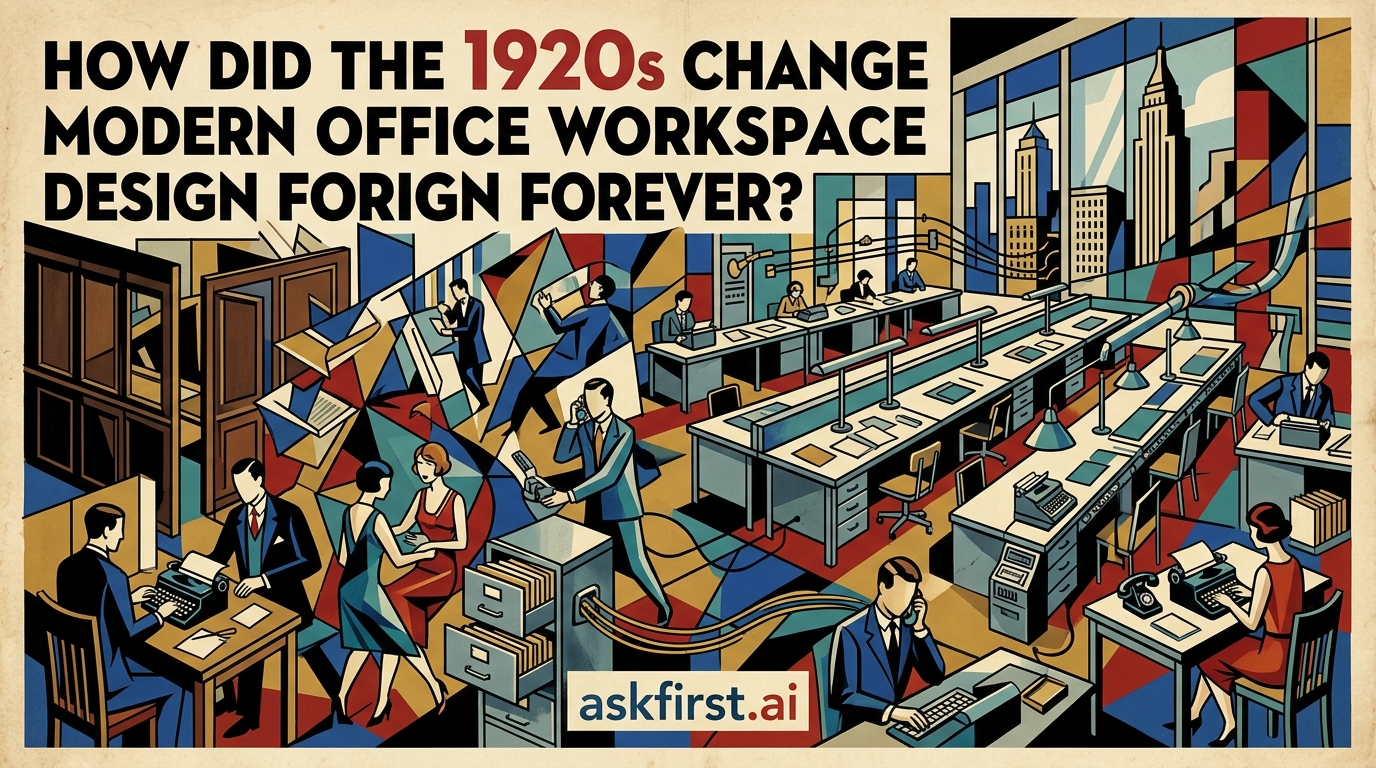
One of the most significant shifts was the adoption of Taylorism, or scientific management. This philosophy prioritized the flow of paperwork and the movement of human bodies with the precision of a factory assembly line. In the 1920s, the emergence of the vast, open-plan office—characterized by long rows of desks—sought to maximize supervision and eliminate wasted time. Managers were no longer secluded behind solid walls; they were placed on raised platforms or at the ends of aisles to monitor the 'input' and 'output' of their staff. This layout, while criticized in modern times as a precursor to the demoralizing cubicle farm, was seen as a pinnacle of efficiency and democratic transparency during the jazz age.
Technological Integration: The Office as a Machine
The 1920s saw the widespread adoption of electrification and the proliferation of the typewriter, dictaphone, and filing system. Prior to this, offices were dimly lit by gas lamps and relied on manual sorting methods that occupied vast amounts of square footage. The decade introduced standardized lighting, which allowed for deeper floor plates—meaning buildings could be wider without relying exclusively on natural light from windows. This architectural change allowed companies to consolidate hundreds of employees onto a single, massive floor. The integration of centralized air circulation and the rise of steel-frame construction meant that columns were spaced further apart, providing the unobstructed, flexible space that defines the modern skyscraper.
The Standardization of Office Culture and Hierarchy
Designers in the 1920s introduced the concept of modular furniture. Instead of bespoke, heavy wooden desks, companies began ordering standardized steel office equipment. This shift was more than visual; it reinforced a rigid hierarchy where desk size, proximity to windows, and access to electrical outlets signaled professional status. These spatial rules were codified in corporate manuals, establishing a social geography that persists in many traditional offices today. The obsession with a 'clean' desk policy, a common modern workplace requirement, actually finds its roots in the early 1920s' desire to keep work surfaces clear for the mechanical efficiency required by burgeoning bureaucratic workflows.
Psychological Impact and Aesthetic Modernism
While the factory-model office flourished, the 1920s also saw the infancy of the 'human relations' movement. Architects began experimenting with color palettes—moving away from dark, oppressive woods to light, reflective surfaces designed to improve employee morale and visibility. The Art Deco movement influenced office lobbies and executive suites, creating a brand identity that combined luxury with capitalist ambition. These spaces were designed to impress clients, marking the transition of the office from a mere utility room to a corporate flagship representing the strength of the firm.
Legacy: The DNA of the 21st Century Workspace
The primary design concepts birthed in the 1920s remain the structural DNA of today's commercial real estate:
- The Open Plan: Modern tech giants still emulate the vast, oversight-heavy layouts of the 1920s under the guise of 'collaboration.'
- Flexibility through Modularity: The transition to lightweight steel components set the stage for the moveable walls and ergonomic furniture systems used today.
- Technology-Driven Geometry: The need to accommodate wires and hardware in the 1920s evolved into the complex 'smart building' data infrastructure required by every modern office.
In conclusion, the 1920s transformed the office by turning it into a science of space. By synthesizing industrial logic with architectural innovation, the era successfully migrated work from the clutter of the 19th century into the streamlined, data-driven, and highly regulated environments that we continue to iterate upon today. The 'machine' that was built in the twenties continues to dictate how we move, interact, and perform in the workplace of the future.