The Multifaceted Architecture of Unemployment: Why Labor Markets Stagnate
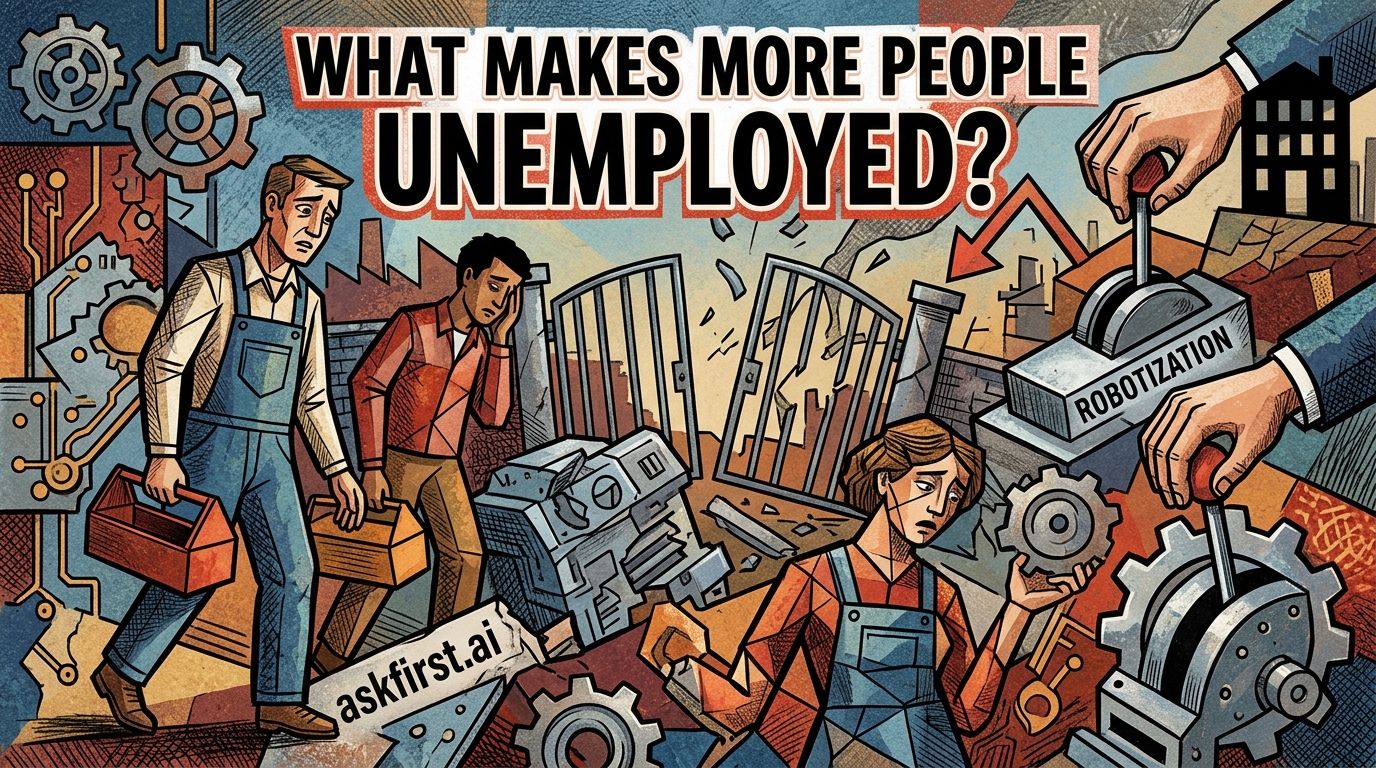
Unemployment is rarely the result of a single policy failure or economic event. Instead, it is a complex, systemic phenomenon driven by the intersection of macroeconomic cycles, structural shifts in industry, and the friction inherent in the transition between roles. To understand why unemployment rises, one must look beyond the surface level of "job loss" and examine the underlying mechanics of labor supply and demand.
1. Cyclical Contractions and Aggregate Demand
The most prominent driver of large-scale unemployment is the cyclical downturn, often referred to as Keynesian unemployment. John Maynard Keynes, in his seminal work The General Theory of Employment, Interest and Money (1936), argued that economies do not always self-correct toward full employment. When aggregate demand—the total spending by households, businesses, and the government—falls, businesses see their inventories rise and profits shrink.
When consumer confidence wanes, as seen during the 2008 Financial Crisis or the initial onset of the 2020 pandemic, firms respond by cutting costs. Labor is almost always the largest variable expense for a corporation. Consequently, mass layoffs occur not because workers have become less skilled, but because the market for the final product has evaporated. This creates a vicious cycle: unemployed workers spend less, which further lowers aggregate demand, leading to more layoffs.
2. Structural Unemployment and the Mismatch of Skills
Unlike cyclical unemployment, which is temporary, structural unemployment represents a permanent shift in the economy. This occurs when there is a fundamental mismatch between the skills workers possess and the skills employers require.
Consider the "Rust Belt" phenomenon in the United States. As manufacturing processes moved toward automation and globalization, workers trained in traditional assembly-line tasks found their skills obsolete. As noted by economists Claudia Goldin and Lawrence Katz in The Race Between Education and Technology (2008), the history of the labor market is defined by a constant race between technological advancement and human capital development. When technology moves faster than the educational system can pivot, structural unemployment spikes. Workers are not necessarily "unemployable," but they are disconnected from the current needs of the high-tech or service-oriented economy.
3. Frictional Unemployment and Information Asymmetry
Even in a healthy economy, some level of unemployment is inevitable. This is known as frictional unemployment. It occurs because the labor market is not a frictionless machine; it takes time for a candidate to find the right employer and for an employer to find the right candidate.
The duration of this unemployment is heavily influenced by the quality of information flow. In the pre-digital era, this was caused by geographic limitations and the lack of accessible job boards. Today, while platforms like LinkedIn have reduced these barriers, "mismatch friction" remains. If a software engineer in Seattle is searching for a role that matches their niche expertise, they may remain unemployed for months. This is a healthy sign of a dynamic economy, but when policy interventions—such as overly generous unemployment benefits that discourage rapid re-entry—are misaligned, frictional unemployment can extend into long-term structural issues.
4. Institutional Factors and Labor Market Rigidity
Government policies play a decisive role in the baseline level of unemployment. In many European nations, high levels of employment protection legislation (EPL) are intended to protect workers, but they can inadvertently increase unemployment.
When it becomes prohibitively expensive or legally difficult to fire an employee, firms become extremely risk-averse regarding hiring. They may rely on temporary contracts or refuse to expand their workforce entirely, fearing they will be unable to downsize if the market turns. Economists like Thomas Sowell, in Basic Economics, point out that minimum wage laws and heavy payroll taxes can also price low-skilled workers out of the market. If the cost of employing a worker exceeds the value they add to the company, the rational economic decision for the firm is to leave that position vacant or automate the process entirely.
5. The Impact of Globalization and Outsourcing
The integration of global markets has allowed firms to seek the most cost-effective labor globally. While this has lowered prices for consumers and increased the wealth of developing nations, it has caused significant displacement in high-wage economies. When a company moves its operations to a region with lower regulatory costs and lower wages, the domestic workforce faces immediate unemployment. This is not a failure of the worker, but a reality of comparative advantage, a concept famously explored by David Ricardo in On the Principles of Political Economy and Taxation (1817).
Conclusion
Unemployment is the product of a delicate equilibrium. It is simultaneously influenced by the ebbs and flows of consumer spending, the rapid pace of technological innovation, the rigidity of labor laws, and the global nature of trade. To mitigate unemployment, policymakers must balance the need for social safety nets with the necessity of a flexible, responsive labor market. Education systems must be agile enough to retrain workers for the digital age, and economic policies must foster an environment where businesses feel confident enough to expand and hire. Ultimately, reducing unemployment requires a holistic approach that addresses both the demand for labor and the quality of the labor supply itself.