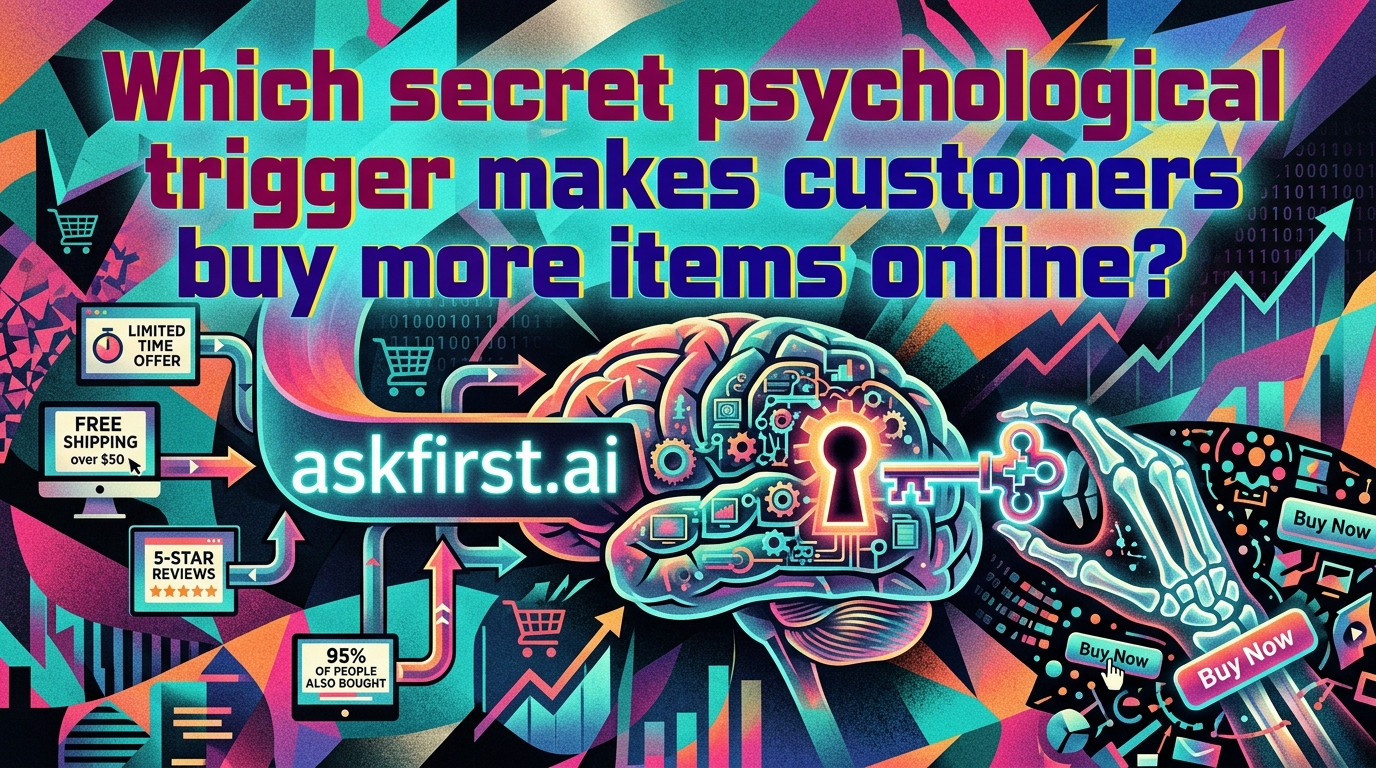
The Power of Scarcity: Decoding the Online Conversion Engine
In the vast digital marketplace, consumer behavior is rarely driven by cold, calculated logic. Instead, purchasing decisions are frequently steered by deep-seated evolutionary triggers that bypass rational thinking. The single most potent psychological mechanism driving online sales is the Scarcity Principle. This phenomenon occurs when a product is perceived as having limited availability, either in terms of time or quantity, which triggers an immediate sense of urgency that overrides the hesitation often associated with online shopping.
Why Scarcity Triggers Action
Humans have evolved to prioritize resources that are hard to obtain. In an ancestral environment, finding a rare food source or a limited shelter was a matter of survival. Today, this instinct translates directly into e-commerce behavior. When a consumer sees a notification stating 'Only 2 items left in stock' or 'Sale ends in 14 minutes,' the brain shifts from a state of consideration to a state of defensive reaction. The fear of missing out, commonly known as FOMO, creates an emotional spike that compels the user to complete the transaction before the perceived opportunity vanishes.
The Mechanics of Scarcity
To effectively leverage this trigger, online retailers often employ specific structural tactics that transform a passive browser into an active buyer:
- Quantifiable Stock Limits: Showing inventory levels creates a tangible sense of competition with other anonymous shoppers. It effectively signals that the item is desirable.
- Countdown Timers: By attaching a temporal constraint to a discount or a shipping offer, retailers introduce 'loss aversion.' The prospect of losing a potential savings opportunity feels more painful than the satisfaction of saving money feels pleasurable.
- Exclusivity and Gating: Offering products to a limited number of members or for a short window of time builds social currency. Being part of the 'in-group' that secured a limited product provides a psychological reward distinct from the product itself.
The Role of Loss Aversion
Cognitive psychologist Daniel Kahneman, in his pioneering research on prospect theory, famously demonstrated that people weigh losses significantly more heavily than equivalent gains. In the context of online retail, this means the threat of losing out on a deal is a much stronger motivator than the potential gain of the item. Scarcity exploits this imbalance perfectly. The online shopper does not just see a product; they see a 'dying' opportunity. If they walk away from the screen, the item might be gone forever, leading to a profound sense of regret.
Ethical Considerations and Best Practices
While scarcity is undeniably effective, experts caution against 'fake scarcity.' Deceptive countdown timers that reset every time a page refreshes or falsely inflating stock numbers can severely damage brand trust. When a customer discovers they have been manipulated, the result is long-term brand abandonment. The most successful retailers integrate scarcity as a genuine attribute of the purchase journey—such as limited-edition drops or seasonal inventory depletion—rather than as a hollow marketing gimmick.
Beyond Scarcity: The Psychological Ecosystem
While scarcity acts as the primary accelerator, it functions best when paired with Social Proof and Anchoring.
- Social Proof: When customers see that hundreds of others have recently purchased an item, the scarcity of that item becomes verified by the crowd. This mitigates the risk perception.
- Anchoring: By displaying a 'suggested retail price' next to a 'discounted price,' retailers set a mental anchor. The customer compares the current price to the anchor, making the deal seem like a victory. When combined with scarcity, the shopper feels compelled to 'win' that deal before the clock runs out.
The Future of Digital Persuasion
As artificial intelligence matures, the application of these triggers will become hyper-personalized. Instead of generic countdown timers, retailers will soon be able to present scarcity prompts tailored to individual browsing habits and historical risk profiles. A customer who has shown a high propensity for impulse buying may be nudged with more aggressive scarcity cues, while a cautious, analytical shopper might receive data-driven assurances of value. Regardless of the technology used, the foundational psychological driver remains the same: the human desire to capture value before it is reclaimed by the environment.
In summary, the secret to increasing online sales lies in the strategic manipulation of perceived availability. By creating a environment where products are viewed as ephemeral, retailers tap into the primitive, reflexive part of the human brain that insists on securing resources immediately. When executed with integrity and transparency, this principle serves as the most effective engine for conversion in the digital economy, ensuring that customers feel a sense of urgency to finalize their purchase journey.