The Myth of Professional Conformity
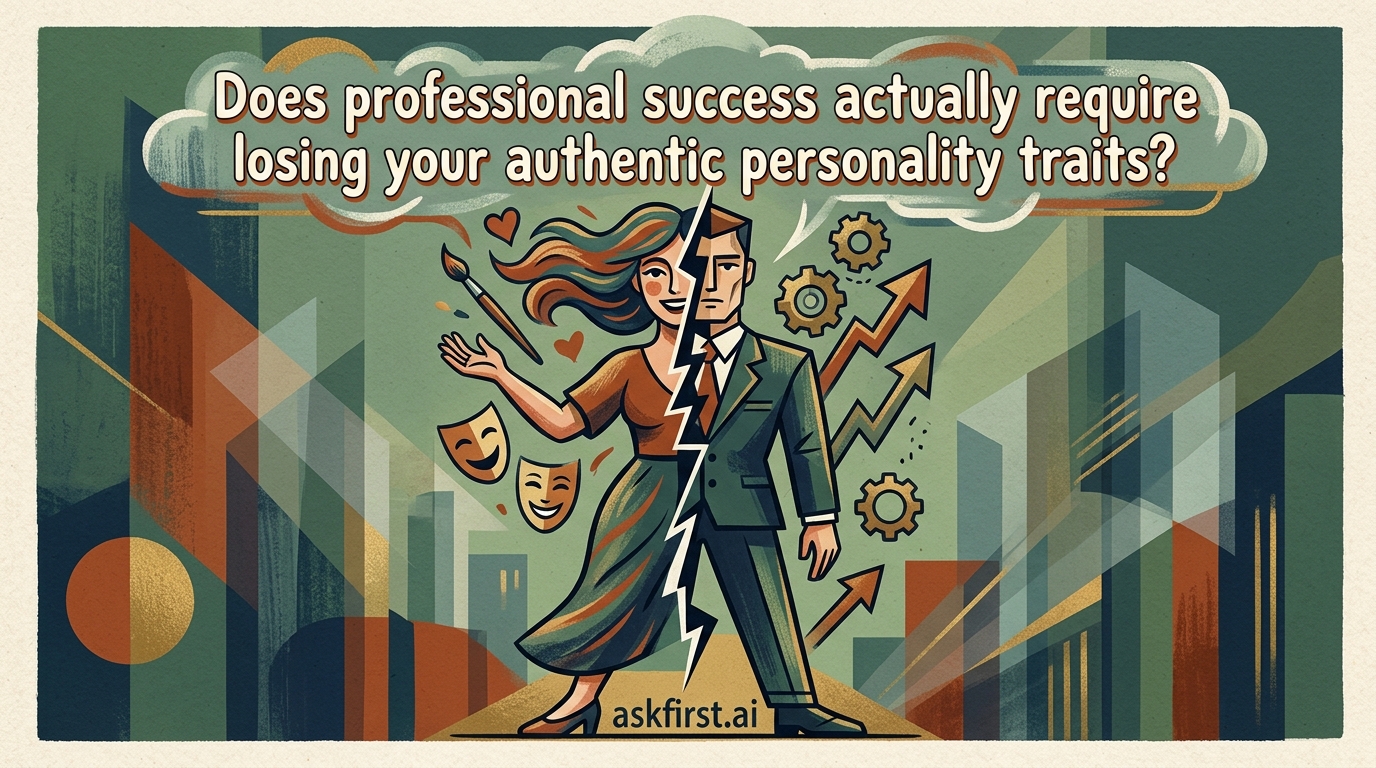
For decades, the corporate world propagated a narrow archetype of the 'successful professional'—an individual defined by stoicism, rigid formality, and a sanitized personality. This prevailing myth suggests that to reach the upper echelons of business, one must strip away eccentricities, personal opinions, and unique character quirks. However, contemporary leadership research increasingly suggests that this performative camouflage is not only unnecessary but actually detrimental to long-term career growth and organizational innovation. Authentic leadership is no longer a soft skill; it is a strategic imperative.
The Psychological Cost of 'Masking'
Psychologists often refer to the suppression of one's identity as 'masking' or 'professional camouflaging.' When individuals attempt to adhere to a rigid, external standard of professionalism, they experience increased cognitive load. Research indicates that the mental energy spent monitoring one’s behavior, suppressing natural instincts, and mimicking an accepted corporate persona detracts from the energy available for critical thinking, emotional intelligence, and problem-solving. Over time, this dissonance leads to burnout, decreased job satisfaction, and the erosion of intrinsic motivation. True excellence is rarely achieved through suppression; it is achieved through the integration of character and function.
Authenticity as a Competitive Advantage
In an era defined by rapid technological shifts and global connectivity, human capital is differentiated not by technical accuracy alone—which automation can handle—but by unique human perspectives. Authenticity serves as a powerful catalyst for trust. In a marketplace saturated with carefully curated, indistinguishable corporate messaging, individuals who exhibit genuine character traits often stand out as credible leaders. Trust is the currency of professional success, and psychological studies consistently demonstrate that transparency and consistency between 'personal' and 'professional' self-expression foster deeper interpersonal connections and more resilient team dynamics.
Debunking the Professionalism Paradox
Professionalism is often misinterpreted as the absence of personality. A more modern, robust definition identifies professionalism as the exercise of competence, reliability, and respectful conduct. These requirements are not mutually exclusive with having a vibrant, distinct personality. One can be a high-stakes negotiator while maintaining a quirky sense of humor, or a disciplined engineer while advocating for creative, unconventional ideas. The key lies in professional integration: the ability to channel one's authentic traits into productive outcomes rather than allowing them to obstruct professional objectives.
Strategies for Authentic Career Advancement
- Identify Core Values: Before attempting to integrate personality into a career, one must clearly define non-negotiable personal values. Knowing what matters ensures that career shifts are aligned with individual integrity.
- Leverage Unique Strengths: Every 'quirk' can be reframed as a professional asset. For example, a high-energy, talkative personality can be channeled into exceptional presentation skills, while a quiet, analytical nature can be channeled into deep focus and meticulous data synthesis.
- Curate the Environment: Success is often a product of environment-fit. Seek out organizational cultures that prioritize results over rigid appearance. Companies that emphasize diversity and inclusion are statistically more likely to value the unique contributions that individual authenticity provides.
- Adopt 'Calibration' Over 'Masking': Instead of hiding parts of the self, successful individuals learn to calibrate their level of expression based on the situation. This is not about being a different person, but about using different tools from a consistent personality toolkit.
The Future of Work and Identity
Looking toward the future of global labor, the integration of personal identity into professional life will likely become even more vital. As industries lean toward collaborative, creative, and service-oriented models, the human element becomes the primary differentiator. Organizations that demand rigid conformity risk losing the very talent they depend on to drive innovation. Conversely, professionals who feel safe to bring their 'whole selves' to work contribute higher levels of engagement and creativity. The evolution of the workforce points toward a model where authentic personality is not an obstacle to be overcome, but a primary engine of career success. By embracing who they truly are, individuals can forge careers that are not only successful by traditional metrics but also deeply sustainable and fulfilling.