The Visionary Failure: General Magic
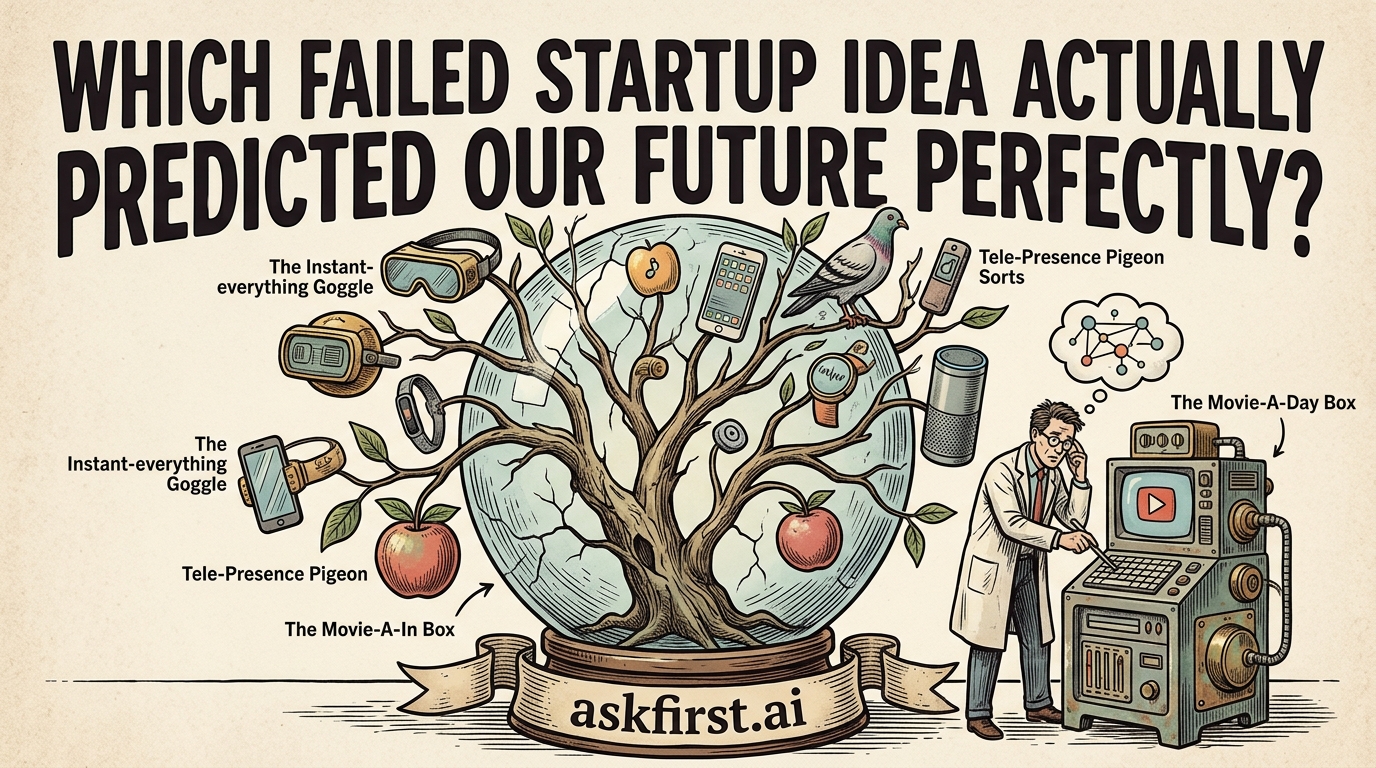
In the annals of Silicon Valley history, few stories are as hauntingly prophetic as that of General Magic. Founded in 1990 by Apple veterans Andy Hertzfeld, Bill Atkinson, and Marc Porat, the company aimed to create a handheld device that combined the functions of a telephone, a computer, and a media player. Despite failing spectacularly by 2002 and liquidating its assets, the project serves as the quintessential example of a startup that was not wrong about the future, but simply wrong about the timing.
Why General Magic Was Ahead of Its Time
To understand the magnitude of General Magic's vision, one must look at the technological landscape of the early 1990s. While the world was barely grappling with the concept of the World Wide Web, General Magic engineers were building a prototype called the 'Pocket Crystal.' This device featured:
- Touch-screen interfaces: Years before the smartphone became a mass-market staple.
- Icons and apps: Concepts that were foundational to the user experience we now consider universal.
- Connected communication: An early iteration of instant messaging and digital connectivity.
- E-commerce capabilities: An attempt to allow users to purchase goods via a handheld interface.
At the time, the processing power was insufficient, battery technology was primitive, and mobile network infrastructure was virtually non-existent. These technical limitations caused the startup to hemorrhage capital and eventually collapse. However, the roadmap they designed directly influenced the creation of the iPhone and Android ecosystems decades later. Their 'failed' concepts were effectively the genetic code for the modern mobile revolution.
The Lesson of the 'Prophetic Failure'
The case of General Magic provides a masterclass in the necessity of 'market readiness' in innovation. A business model can be intellectually brilliant, technically sophisticated, and functionally sound, yet still succumb to external factors. The ecosystem—the availability of high-speed data, the ubiquity of hardware components, and the cultural acceptance of mobile living—simply had not yet matured.
Key Takeaways for Future Innovators:
- Iterative Development is Critical: Great ideas require a foundation of supporting infrastructure. General Magic attempted to build the phone, the OS, and the network simultaneously, which proved to be an impossible vertical integration burden.
- Timing is an Independent Variable: In many high-tech industries, being 'too early' is indistinguishable from being 'wrong.' A company must balance its vision with the current reality of consumer infrastructure.
- The Talent Legacy: Despite the failure of the company itself, General Magic served as a talent factory. Its alumni went on to hold executive and engineering roles at Apple, Google, eBay, and other industry giants, carrying the 'Magic' philosophy of handheld computing forward.
Societal Impact and Predictive Power
The reason General Magic is often cited today is the eerie accuracy with which its leadership described the lifestyle of the 21st century. Their marketing materials featured people video calling, accessing stock tickers on the go, and using digital maps—scenes that were derided as science fiction in the 90s but represent the average daily experience of a commuter in any major city today. They did not just predict the hardware; they predicted the shift in human behavior from static connectivity to dynamic, mobile-first existence.
Conclusion
General Magic acts as a bridge between the dreamers of the pre-internet age and the reality of our current digital civilization. It serves as a reminder that failure in business is rarely a binary outcome. It can be a multi-generational investment in innovation. When evaluating modern startups, one must ask if the lack of success is due to a bad idea, or simply a market that is not yet ready to wake up to the future. General Magic taught the world that the future is inevitable; it is just a matter of waiting for the rest of the world to catch up to the dreamers.