The Power of the Decoy Effect
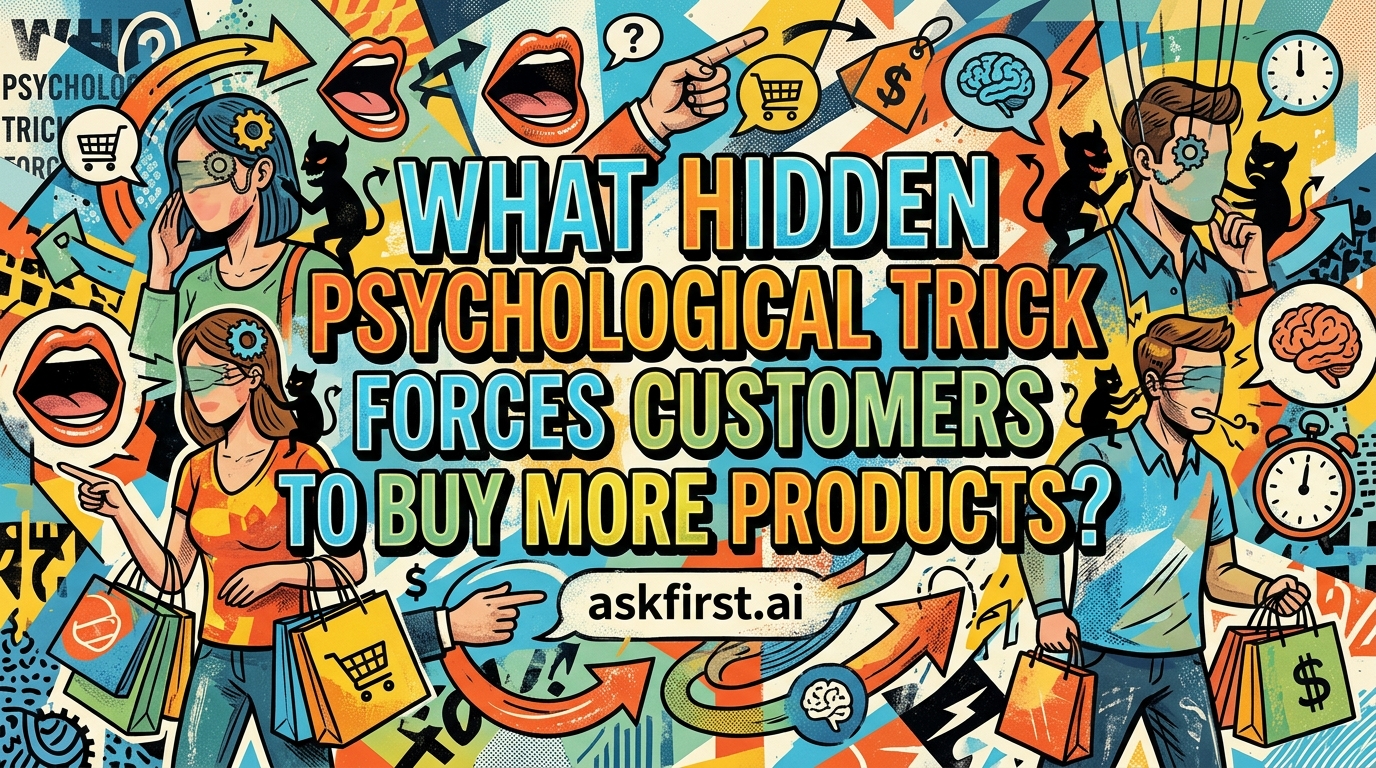
The most pervasive, effective, and often invisible psychological tool used by global retail giants to manipulate consumer behavior is known as the Decoy Effect. This phenomenon, technically referred to by behavioral economists as the 'asymmetric dominance effect,' is a strategic pricing mechanism designed to nudge shoppers toward a higher-priced product by introducing a third, less attractive option. This strategy effectively bypasses logical cost-benefit analysis and exploits human cognitive biases to increase the average order value.
Understanding the Mechanism
At its core, the Decoy Effect functions because human beings are poor at valuing items in isolation. Instead, consumers rely on relative comparison. When faced with two choices, a consumer might struggle to decide based on value. However, when a third, strategically priced option is added, it creates a point of reference that makes the most expensive or premium product appear to be an undeniable bargain.
Consider the classic example of a movie theater popcorn menu:
- Small: $3.00
- Medium: $6.50
- Large: $7.00
In this scenario, the 'Medium' is the decoy. It is priced so close to the 'Large' that the value proposition of the Medium collapses. The consumer perceives that paying an extra $0.50 for a significantly larger bucket is an incredible deal. Consequently, the theater successfully guides the customer to purchase the most expensive item—the Large popcorn—because the presence of the Medium made it look like a superior choice.
Why the Brain Falls for It
This trick works because it exploits Loss Aversion and the Framing Effect. Humans feel a stronger emotional pull to avoid a bad deal than to seek a great one. When the 'Medium' is presented, the consumer cognitively labels it as 'wasteful' or 'inefficient' compared to the 'Large.' Once the brain rejects the decoy, the comparison shifts entirely to the remaining options, which have already been framed to make the most profitable item for the business seem like the smartest decision.
Strategic Applications in Modern Commerce
Subscription Tiers: Software companies and streaming services often use this to push users to their mid-tier or premium plans. By creating a 'Basic' plan with limited features, a 'Pro' plan, and a 'Premium' plan that is only marginally more expensive than 'Pro' but offers significantly more storage or user seats, they use the 'Pro' plan as a decoy. The customer feels they are 'getting more for just a few dollars extra.'
Automotive Upgrades: When selecting car features, dealers often present a 'base' model, a 'mid-range' package, and a 'fully loaded' package. By making the 'mid-range' price point feel underwhelming compared to the full luxury package, the customer is psychologically propelled toward the highest margin item.
Real Estate and Travel: Hotels frequently list a standard room, a deluxe room, and a premium suite. The deluxe room often serves no purpose other than to act as a reference point, making the premium suite feel like a logical, value-added upgrade rather than a luxury expense.
The Science of Cognitive Ease
Psychologists emphasize that the Decoy Effect works best when the consumer is in a state of high 'cognitive ease.' When a shopper is tired, rushed, or overwhelmed by choices, their brain stops performing complex mathematics and starts using heuristics—mental shortcuts. The Decoy Effect provides a clear, simple heuristic: 'That one is a bad deal, so I will take the bigger one.' By removing the need to deliberate, businesses reduce 'choice paralysis' and accelerate the transition from shopper to buyer.
How Consumers Can Protect Their Wallets
Understanding this trick is the first step toward regaining control over purchasing decisions. To avoid falling for the Decoy Effect, consumers should follow these expert strategies:
- Calculate the Unit Price: Ignore the labels and look strictly at the cost per ounce, per user, or per square foot. Math provides an objective reality that psychological frames cannot distort.
- Define Needs First: Before walking into a store or opening an app, establish exactly what is required. If a small coffee is sufficient for your hunger, the existence of a massive 'value' size should be irrelevant to your decision-making process.
- The 'Empty-Set' Test: Ask yourself, 'Would I still choose this specific item if the other options weren't available?' If the answer is no, you are being manipulated by the comparison frame.
In summary, the Decoy Effect is a masterclass in behavioral architecture. By understanding that human value assessment is inherently relative, businesses have successfully turned our own cognitive biases into a revenue engine. Recognizing this pattern allows for more mindful consumption and serves as a powerful reminder that not every 'deal' is designed for the customer's benefit.