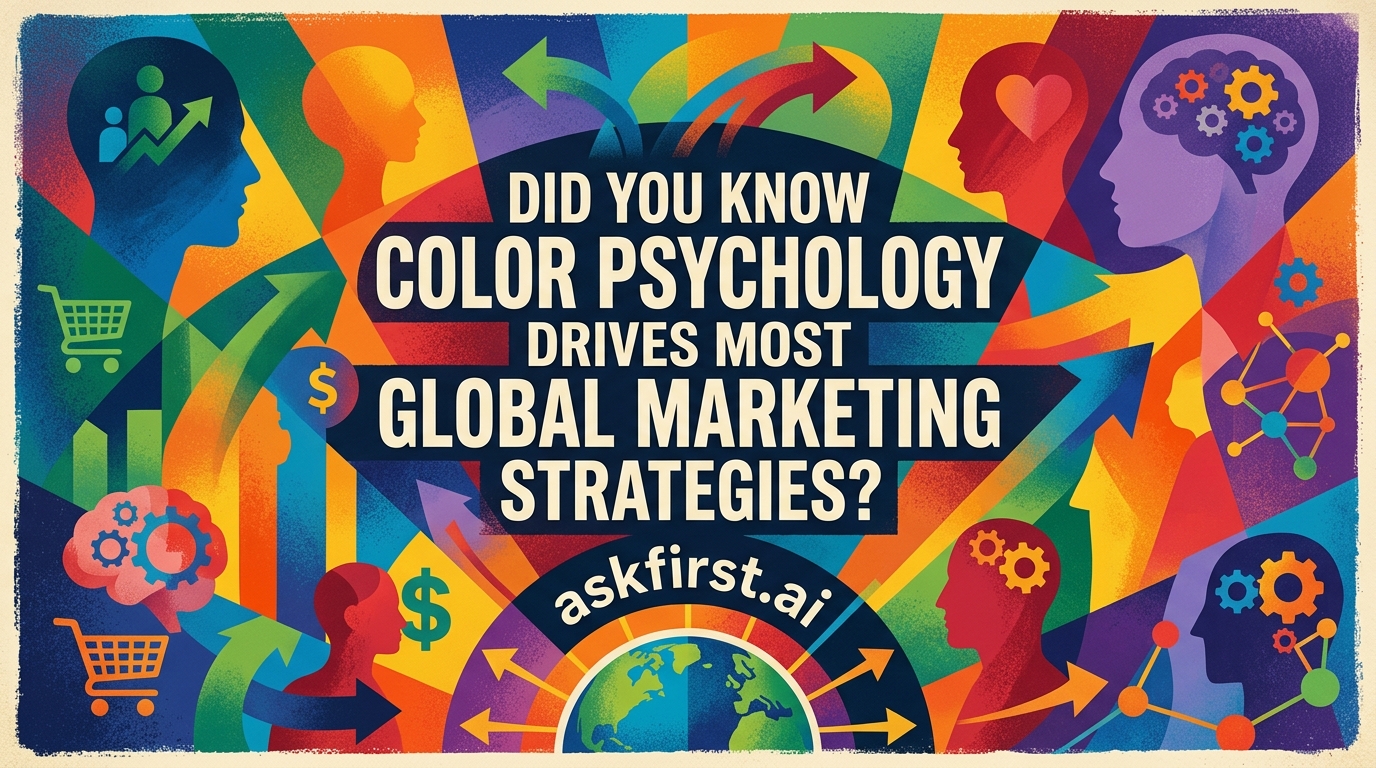
The Invisible Language of Color: A Strategic Deep Dive
Color psychology is not merely an artistic choice; it is a sophisticated, evidence-based science that dictates consumer behavior, influences brand perception, and anchors global marketing strategies. Brands do not pick their primary colors because they look good; they select them based on biological, cultural, and psychological triggers that bypass conscious reasoning to influence immediate emotional responses.
The Biological and Evolutionary Foundation
Human interaction with color is rooted in evolutionary biology. For early humans, specific colors signaled survival opportunities or threats. Red, for instance, is a high-arousal color. It mimics the appearance of blood and fire, triggering an immediate physiological response: increased heart rate and heightened alertness. In marketing, red is frequently used to stimulate urgency, hunger, and impulse buying—hence its ubiquity in fast-food logos and 'Clearance' banners.
Conversely, colors like blue are associated with the sky and water, elements that suggest constancy and safety. This is why financial institutions, insurance companies, and tech giants gravitate toward blue. It communicates reliability and security, which are foundational pillars for businesses asking for long-term customer trust.
Cultural Variations and Global Branding
While biological responses are often universal, cultural context is a critical variable that brands must navigate. A marketing strategy that succeeds in New York may collapse in Beijing due to contrasting color symbolism:
- White: In many Western cultures, it represents purity, cleanliness, and marriage. In parts of Asia, it is traditionally associated with mourning and grief.
- Yellow: In North America, it is often associated with sunshine and cheerfulness. In some African cultures, it can represent success and status, while historically in France, it was sometimes used to mark the homes of traitors or criminals.
Global brands must adopt a 'glocal' approach—maintaining a consistent brand identity while adjusting visual assets to respect regional psychological associations. This nuance is why successful multinational corporations invest heavily in cultural semiotics before launching campaigns in new territories.
The Mechanics of Color in Marketing
Impulse vs. Logical Consumption: Warm colors like orange, red, and yellow are proven to encourage impulsive shopping. These colors create a sense of excitement and urgency. Cooler tones like blue and green foster a more thoughtful, methodical decision-making process. High-end brands often use cooler tones, black, or metallic accents to convey prestige and value, encouraging consumers to pause and perceive quality rather than chasing a quick discount.
The 90-Second Verdict: Scientific studies indicate that consumers make subconscious judgments about a product within 90 seconds of viewing it. Between 60% and 90% of that initial assessment is based on color alone. If a brand’s color palette fails to align with the product’s core promise, the subconscious disconnect can lead to immediate disinterest, regardless of the quality of the product.
Brand Personality Construction: Colors communicate 'character.' A brand utilizing vibrant, multi-colored palettes is signaling playfulness, diversity, and youth (e.g., Google or eBay). A brand utilizing stark, monochromatic black and white signals minimalism, sophistication, and timelessness (e.g., Apple or Chanel). When a company chooses a specific hue, they are actively defining their target audience’s psychological profile.
Why This Matters for the Future
As we look toward 2030 and beyond, the digital landscape will rely even more heavily on color psychology. In a world saturated with digital interfaces, the cognitive load on consumers is at an all-time high. Brands that understand how to utilize color to cut through this noise without creating visual anxiety will dominate the market share.
Furthermore, the evolution of Augmented Reality (AR) and Virtual Reality (VR) will place new demands on visual strategy. Designers must account for how colors interact with light, depth, and spatial movement. The emotional manipulation of color in a 3D space will likely become the next frontier in consumer engagement.
Conclusion: The Unspoken Influence
Marketing is essentially the art of non-verbal communication. Color serves as the most potent vocabulary in that language. It does not just paint a logo; it sets the stage for a relationship between the consumer and the brand. By mastering the intersection of human psychology and visual perception, businesses ensure they remain relevant, persuasive, and memorable long after the initial interaction occurs. Understanding this influence transforms a simple color choice into a powerful strategic asset.