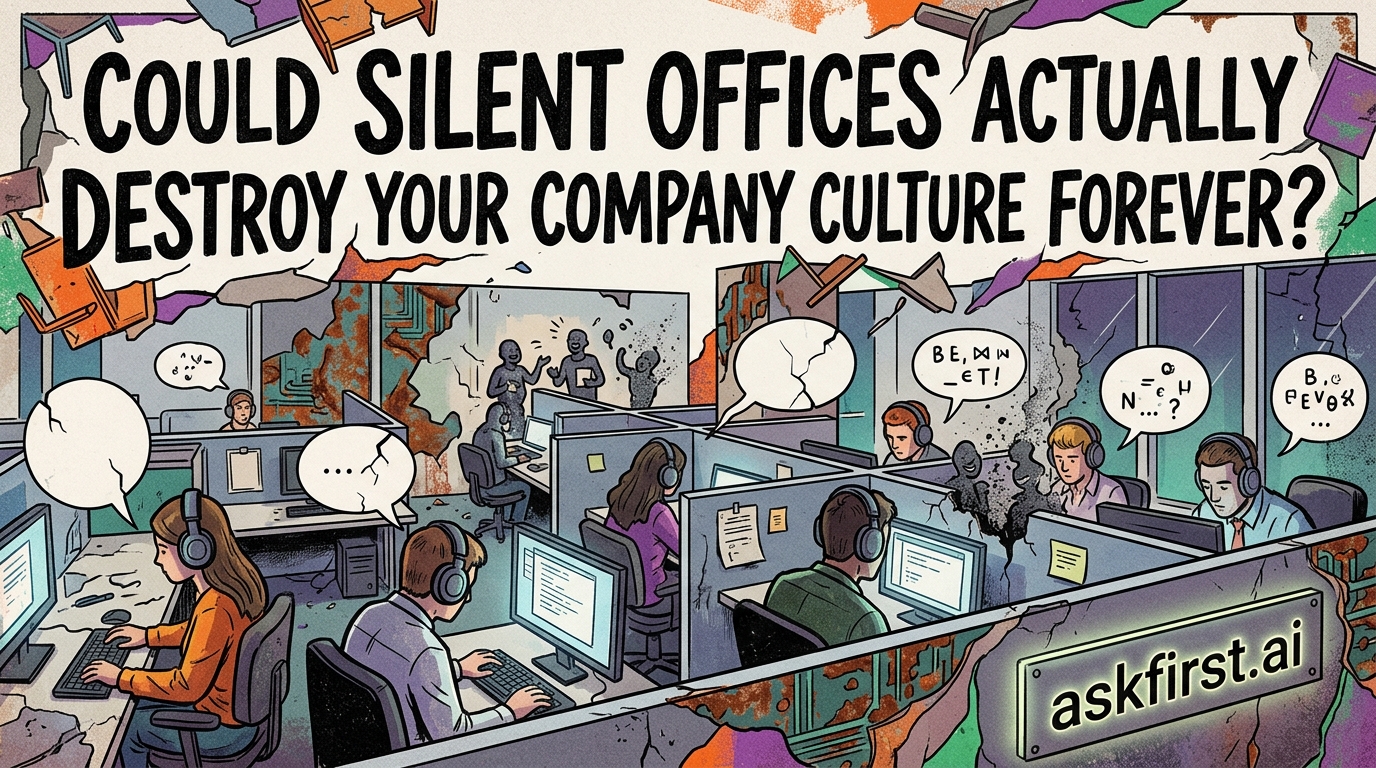
The transition toward open-office plans and, subsequently, the hyper-focus on individual productivity through noise-canceling technology has created a paradoxical challenge: the 'Silent Office.' While silence is often equated with deep work, an environment devoid of human interaction can systematically dismantle the social glue that holds an organization together. Company culture is not merely a collection of perks; it is an emergent property of spontaneous human connection, observation, and the informal exchange of ideas. When silence becomes the primary design language of a workspace, organizations risk losing the intangible benefits of 'collaborative serendipity.'### The Anatomy of Silent DecayThe decline of corporate vibrancy often begins with the erosion of the 'watercooler effect.' Psychological research indicates that the most innovative breakthroughs frequently occur not in scheduled, structured meetings, but during the informal, low-stakes conversations that happen in corridors or kitchens. In a silent office, the psychological barrier to initiating a conversation is significantly higher. Employees begin to view communication as a disruption rather than a benefit. This shift in perception creates a culture of isolationism where team members prioritize their individual output over organizational cohesion. Over time, this leads to a lack of empathy, diminished trust, and the breakdown of mentorship opportunities, all of which are detrimental to long-term success.### The Cost of Digital IsolationReliance on asynchronous communication tools like messaging apps or project management software, while efficient, fails to capture the emotional nuances of face-to-face interaction. The silent office promotes a digital-first communication style that lacks non-verbal cues such as tone of voice, body language, and immediate feedback. This often leads to: * Reduced psychological safety: Without casual dialogue, employees feel less comfortable expressing doubts or proposing radical ideas. * Weakened social bonds: Human beings are inherently social creatures; the absence of verbal interaction reduces the 'belongingness' factor, leading to higher turnover rates. * Loss of shared context: When employees work in silos, they lose the pulse of the company vision and struggle to understand the challenges faced by their colleagues in other departments.### Reclaiming Cultural VitalityOrganizations must actively architect environments that balance the need for focused, quiet work with the essential requirement for organic engagement. Here are strategic approaches to preventing the terminal decline of culture:#### 1. Designing 'Collaboration Hubs'Instead of forcing universal silence, offices should be zoned into 'focus wings' and 'engagement hubs.' The goal is to create designated areas where noise is not just permitted but encouraged, such as communal lounges or interactive whiteboarding spaces, ensuring that employees have space to breathe, talk, and ideate without guilt.#### 2. Encouraging 'Low-Stakes' SocializationManagers play a pivotal role in normalizing interaction. By hosting 'no-agenda' syncs, standing meetings, or simply modeling the behavior of stopping by a colleague's desk for a quick, non-work-related chat, leadership can dismantle the anxiety that a silent office generates.#### 3. Prioritizing Synchronous MomentsEven in the era of digital efficiency, prioritizing face-to-face team rituals—whether through structured retrospectives or shared meals—acts as a counter-measure to the silence. These moments serve as a pressure valve, allowing for the build-up of rapport that cannot be generated through a screen.### The Future of Workspace DynamicsThe silent office is a modern myth of productivity. While distractions are real, the solution is not the elimination of sound, but the careful orchestration of human interaction. A company that prioritizes silence above all else might gain in short-term task completion, but it loses the creative vitality and emotional resilience required to survive market shifts and organizational crises. Culture is an active process. If that process is muted, the identity of the company begins to fade. To maintain a competitive edge, businesses must recognize that culture is built in the spaces between tasks, in the laughter shared during a break, and in the collaborative energy that only emerges when voices are allowed to resonate throughout the workplace.





Ask First can make mistakes. Check important info.
© 2026 Ask First AI, Inc.. All rights reserved.|Contact Us