The Paradox of Passion: Why Monetization Fails
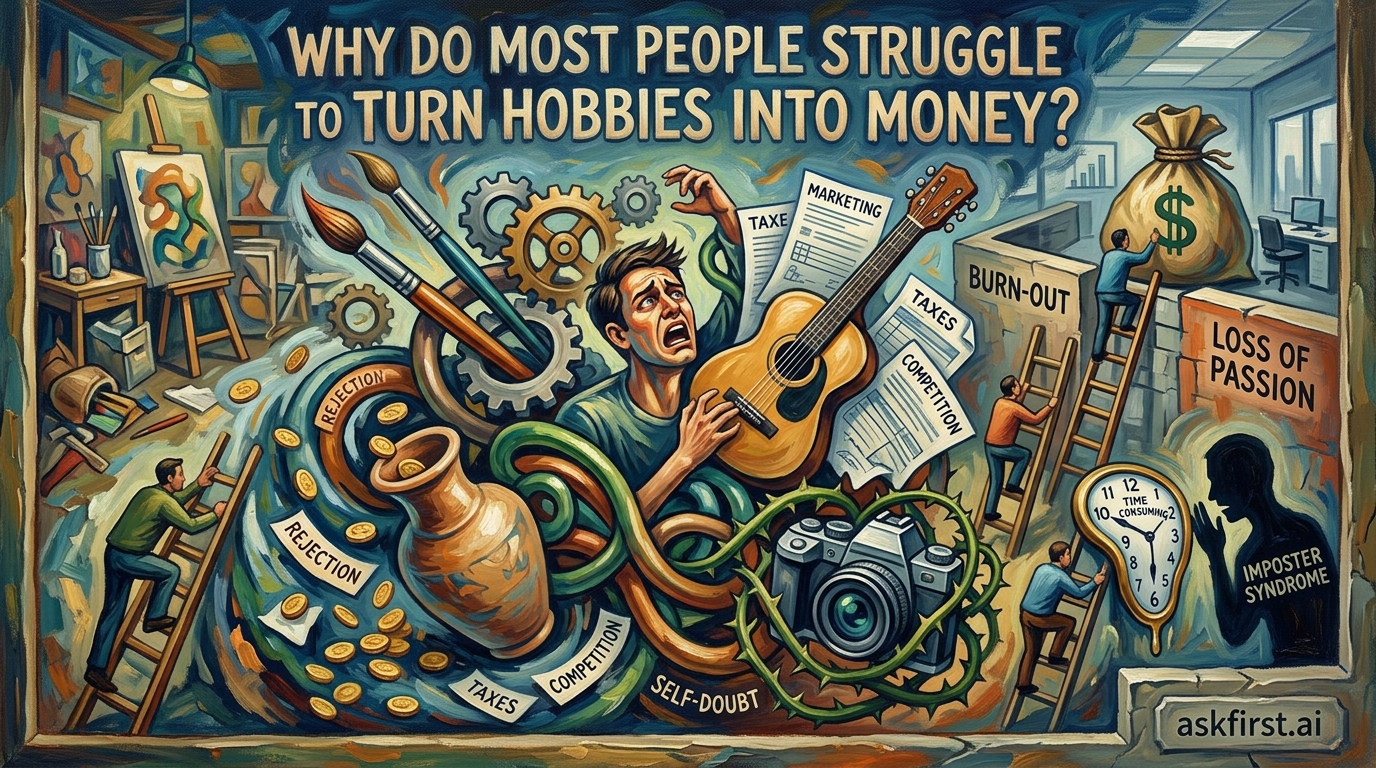
Many individuals harbor the belief that if they enjoy a craft, they can naturally translate that enjoyment into a profitable venture. However, the data suggests that turning a hobby into a business is fraught with psychological and structural traps. The fundamental reason for this struggle lies in the conflict between intrinsic motivation and extrinsic pressure.
The Psychology of 'The Overjustification Effect'
At the core of the problem is a phenomenon known as the Overjustification Effect. When a person performs an activity for the sheer joy of it—intrinsic motivation—it produces high levels of creative satisfaction. Once financial rewards are introduced, the brain often reclassifies the activity from 'play' to 'work.' According to research published in the Journal of Personality and Social Psychology, providing external rewards for inherently interesting tasks can actually diminish internal interest. The hobby, once a sanctuary for creative expression, becomes a task list governed by deadlines, quality control, and client satisfaction. This shift inevitably leads to burnout, as the source of personal replenishment is now the source of professional stress.
The Myth of Market Demand
Another significant barrier is the disconnect between personal skill level and market viability. Mastery in a hobby often develops in isolation. The artisan focuses on techniques that interest them personally, rather than those that solve problems for others. A business, by definition, requires a customer base with a specific need. If an individual crafts custom wooden puzzles, they may be satisfied by the difficulty of the project, but the market might be flooded with cheaper, factory-produced alternatives. Success requires shifting the focus from 'What do I want to create?' to 'What is the market willing to pay for?'. This pivot is uncomfortable for many creators who view their work as a form of self-expression rather than a commodity.
The Burden of Operational Overhead
Many hobbyists drastically underestimate the 'invisible work' required to sustain a business. Transitioning from hobbyist to entrepreneur necessitates proficiency in several non-creative fields:
- Marketing and Customer Acquisition: Building a brand, managing social media, and finding leads.
- Financial Literacy: Tax compliance, pricing strategy, overhead cost management, and profit margins.
- Operations: Inventory management, shipping logistics, and customer service.
When a hobbyist spends 80% of their time on these administrative tasks, they are left with only 20% for the creative work they actually enjoy. This realization often kills the passion that started the journey in the first place.
Scalability and The Quality Trap
Most hobbies are highly individualized. The 'handmade' quality is often the selling point, yet it is simultaneously the biggest bottleneck for growth. It is physically impossible to scale a craft if every unit requires the creator's direct input. If a creator attempts to hire others or increase volume, the unique 'soul' of the product may diminish, leading to a loss of the original audience. Understanding the difference between a 'craft-based hobby' and a 'scalable business model' is the pivotal step that separates successful entrepreneurs from those who simply trade their time for a meager, exhausting wage.
How to Mitigate the Risks
To successfully bridge the gap, consider these strategic shifts:
- Maintain Boundaries: Keep a portion of your creative work strictly for yourself, with no intent to sell it. This protects your intrinsic motivation.
- Validate Before Launch: Use minimum viable products (MVPs) to test if there is a paying audience before investing significant capital or time.
- Outsource or Automate: Acknowledge that you are not a master of every department. If you can automate bookkeeping or outsource simple logistics, do so to protect your creative energy.
- Adopt an Entrepreneurial Mindset: Accept that you are moving from a 'creator' to a 'facilitator of value.' The goal is not just to make art, but to solve a specific problem or fulfill a specific desire for your customer.
In conclusion, the failure to monetize a hobby is rarely due to a lack of talent. It is almost always a failure of strategy, mindset, and the structural realization that a business is a distinct machine from a creative pastime. By distinguishing between the two, you can preserve your passion while building a sustainable, profitable future.