The Reality of Digital Income: Navigating the Online Economy
The digital landscape has fundamentally transformed how wealth is generated, distributed, and maintained. In 2026, the question is no longer whether it is possible to make money online, but rather how one can navigate the vast, often saturated, and highly competitive digital marketplace to build a sustainable income stream. Making money online is not a shortcut to instant riches; it is a business discipline that requires the same rigor, strategy, and persistence as any traditional brick-and-mortar venture.
The Pillars of Digital Wealth Creation
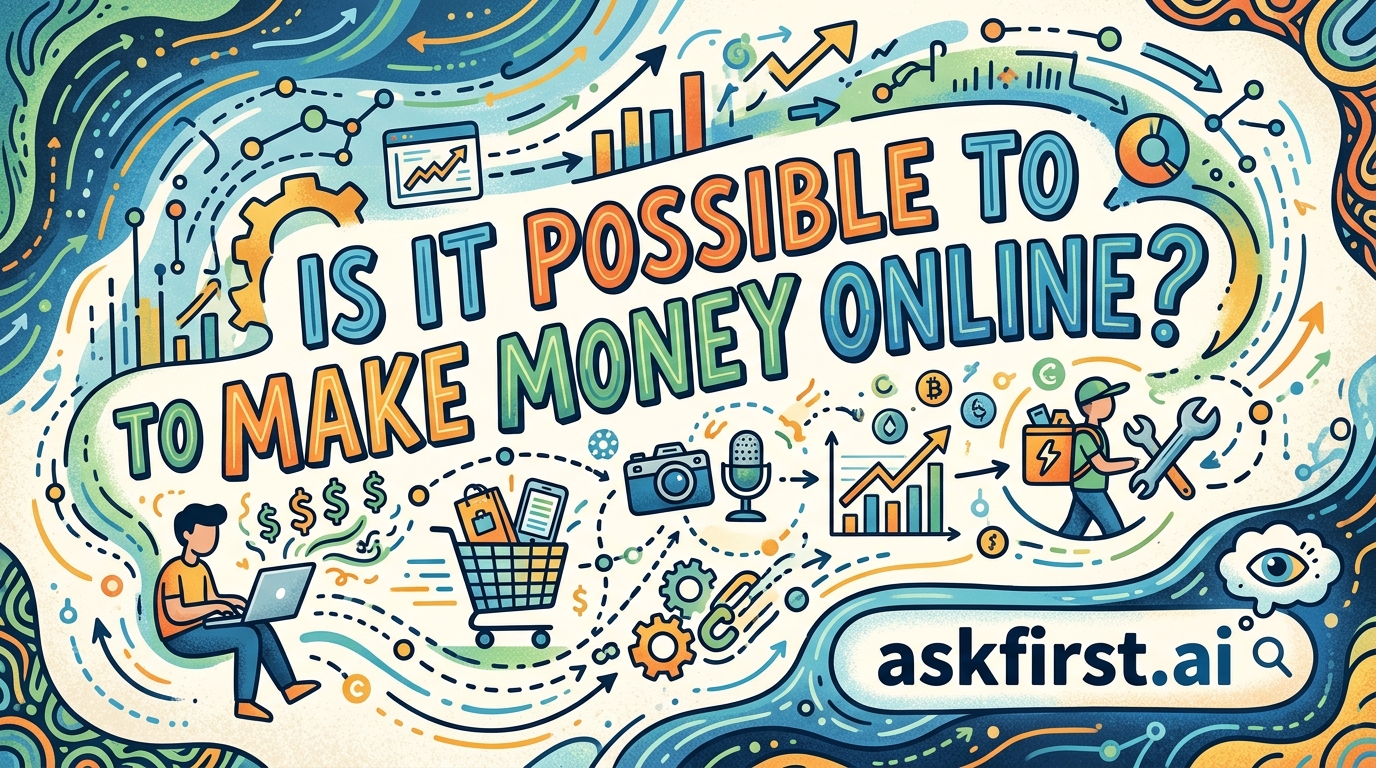
To understand how money flows online, one must categorize the various methodologies into distinct operational models. These models generally fall into four primary pillars:
1. Intellectual Property and Content Monetization
This involves creating value through expertise or entertainment. Whether through blogging, podcasting, or video production, the mechanism is the same: building an audience and monetizing attention.
- Affiliate Marketing: As documented by Pat Flynn in his seminal guide Will It Fly?, affiliate marketing involves earning a commission by promoting other companies' products. The success of this model relies on trust; if your audience trusts your recommendations, they will purchase via your unique links.
- Digital Products: Creating e-books, online courses, or proprietary software allows for high-margin income. Platforms like Teachable or Gumroad provide the infrastructure, but the value lies in the intellectual property itself.
2. Service-Based Arbitrage (Freelancing)
Freelancing is the most direct path to online income. By leveraging skills such as copywriting, graphic design, software development, or digital marketing, individuals can sell their labor to a global market.
- The Gig Economy: Platforms like Upwork or Toptal facilitate this exchange. The key to scaling here is moving from hourly billing to value-based pricing. As Tim Ferriss notes in The 4-Hour Workweek, the goal is to decouple your time from your income, eventually transitioning from a freelancer to an agency owner who manages others.
3. E-commerce and Direct-to-Consumer (DTC)
Selling physical goods online has evolved from simple eBay auctions to sophisticated DTC brands.
- Dropshipping and FBA: Utilizing Amazon’s Fulfillment by Amazon (FBA) service allows entrepreneurs to focus on marketing and product selection while Amazon handles the logistics.
- Private Labeling: Building a brand, rather than just selling commodities, is where long-term wealth is captured. By developing a unique product and protecting it with intellectual property, entrepreneurs create assets that can eventually be sold for a high multiple, a process detailed extensively in Built to Sell by John Warrillow.
4. Financial Markets and Asset Management
With the rise of decentralized finance (DeFi) and accessible brokerage platforms, individuals can participate in global markets. However, this carries significant risk. Successful participants often follow the principles of value investing as outlined by Benjamin Graham in The Intelligent Investor. This is not "getting rich quick," but rather the systematic allocation of capital into income-generating assets.
The Crucial Role of Skill Acquisition
The barrier to entry for making money online is remarkably low, which serves as both a blessing and a curse. Because anyone can start, the competition is fierce. The differentiator is the specific, high-value skill set an individual brings to the table.
In his book So Good They Can't Ignore You, Cal Newport argues that "career capital"—the rare and valuable skills you acquire—is the true currency of the modern economy. Instead of chasing "passion," he suggests that individuals should focus on mastering skills like data analysis, high-end sales, or complex problem-solving. When you possess a skill that is both rare and valuable, the market will naturally compensate you at a higher rate.
Common Pitfalls and the Myth of Passive Income
It is vital to address the misinformation surrounding "passive income." True passive income is the result of significant upfront investment, either in time or capital. You cannot simply "set it and forget it" without first building a system that provides value to the market. Many beginners fall prey to "get-rich-quick" schemes that promise effortless returns. These are almost universally fraudulent.
As noted in the FTC’s consumer alerts regarding business opportunity scams, any venture that guarantees high returns with little to no effort is a red flag. Sustainable online income requires constant iteration, customer service, and adaptation to technological shifts, such as the increasing integration of machine learning in marketing workflows.
Conclusion: A Strategic Approach
Making money online is entirely possible, but it requires a shift in mindset from "consumer" to "producer." You must identify a specific problem in a specific market and offer a solution that is better, faster, or more accessible than the current alternatives. Whether you choose to monetize your expertise through courses, sell physical goods, or provide professional services, the underlying principle remains the same: Value exchange.
Start by validating your idea with a small, low-risk test. Use the lean startup methodology—build, measure, and learn. By focusing on building tangible assets and refining your skills, you move away from the volatility of "hustling" and toward the stability of a digital business. Persistence, coupled with a commitment to continuous learning, remains the most reliable pathway to financial success in the digital age.