The Resilience of Primitive Exchange
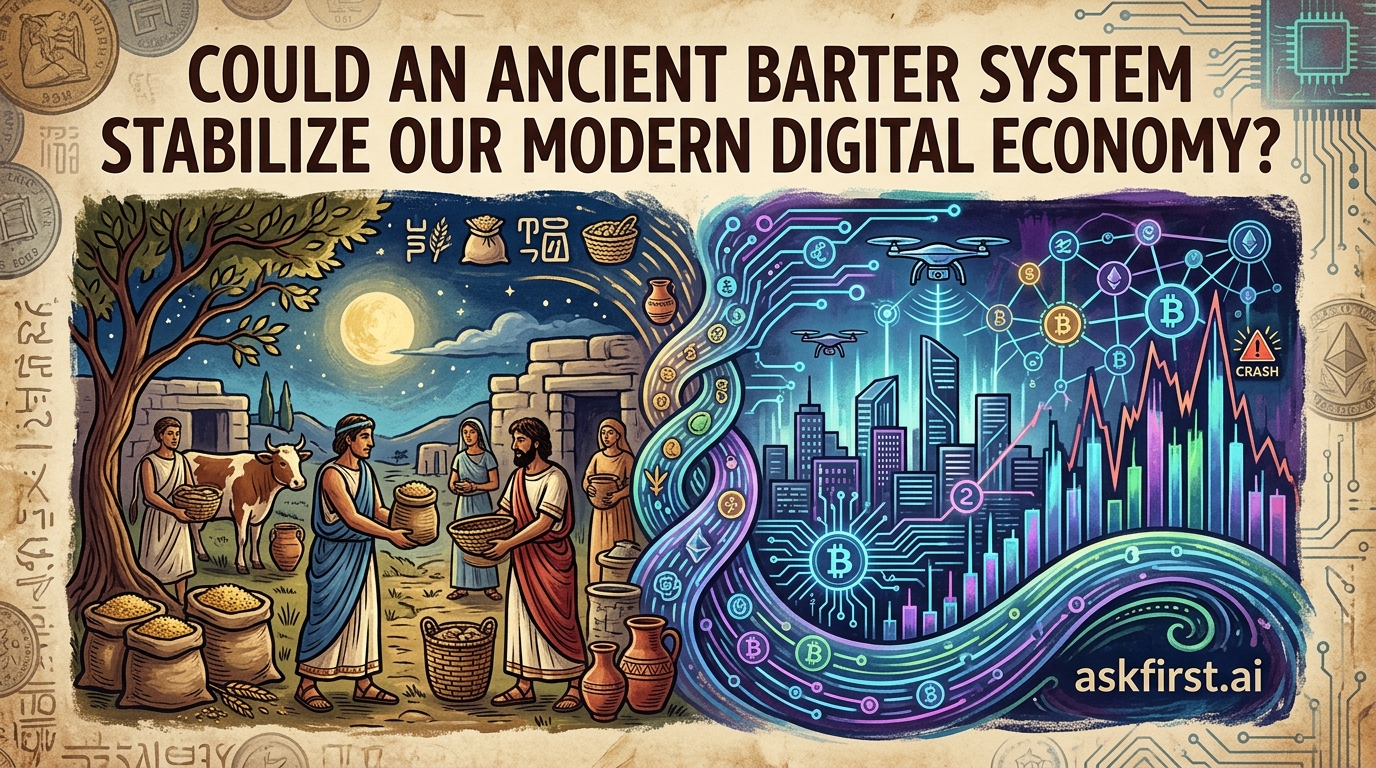
The concept of barter, the direct exchange of goods or services without an intermediary medium of exchange, predates currency by millennia. While modern economics often dismisses barter as an inefficient, clunky precursor to sophisticated central banking, historical and anthropological data suggest that barter mechanisms possess inherent stability characteristics that modern fiat systems lack. By removing the abstract layers of interest, speculative debt, and inflationary pressure, barter restores a sense of tangible value that anchors economic activity to physical needs and verifiable utility.
The Mechanics of Digital Barter
Modern digital technology has fundamentally altered the feasibility of barter. Historically, the 'double coincidence of wants'—the requirement that each party has what the other needs—served as the primary constraint. In a globalized digital era, smart contracts, decentralized ledgers (blockchain), and automated matching algorithms can facilitate multi-party barter exchanges at scale. For instance, Person A provides programming services to Person B, who provides architectural designs to Person C, who provides hosting infrastructure to Person A. Through digital accounting, this closed loop effectively functions as a friction-less barter network that bypasses the need for national currencies.
Why Decentralization Trumps Fiat
Anti-Inflationary Integrity: Unlike fiat currency, which is subject to the printing policies of central banks and macroeconomic shifts, goods and services have intrinsic, stable value. A bushel of grain or a specific software module retains relative value regardless of currency devaluations. By shifting a portion of economic activity to barter-based systems, an economy builds a buffer against systemic monetary collapse.
Reduced Financial Intermediary Dependency: Transaction costs, clearinghouse fees, and banking regulations impose a significant 'tax' on economic growth. Barter systems rely on peer-to-peer verification, effectively removing the middleman. When the middleman is removed, the velocity of trade can theoretically increase within specific communities, as value is kept within the loop of service providers.
Psychological Anchoring: Modern digital finance often feels disconnected from reality, leading to 'gamified' trading and speculative bubbles. Barter forces participants to quantify value in terms of tangible outcomes. This creates a psychological tether to real-world production, acting as a stabilizer when speculative markets enter periods of extreme volatility.
Case Studies and Theoretical Applications
- LETS (Local Exchange Trading Systems): Numerous communities have successfully implemented LETS models during periods of economic hardship. By creating a 'community currency' that is essentially a sophisticated ledger of mutual credit (a form of time-banking barter), these regions have successfully stabilized local purchasing power when national liquidity dried up.
- B2B Barter Exchanges: Large-scale corporate barter platforms exist today, allowing companies to trade excess capacity for essential goods. When a company with idle manufacturing capacity trades that time for software, both sides preserve their liquid capital while maximizing efficiency. Extending this to individual consumers via AI-driven matching engines could create a parallel 'stable economy' that functions during financial crises.
Challenges to Widespread Adoption
Despite the benefits, significant hurdles exist. The primary challenge is taxation and regulation. Governments rely on fiat transaction logs to levy taxes. A shift to barter represents a significant challenge to sovereign revenue collection, which may lead to legal pushback. Furthermore, liquidity constraints remain; while a barter system can stabilize, it lacks the immense, liquid flexibility of a global reserve currency. Consequently, a hybrid system—where digital barter supplements fiat—appears to be the most viable path forward for long-term economic resilience.
Conclusion: A Stabilizing Influence
Could barter stabilize the digital economy? The answer is a qualified yes. While barter cannot replace the global banking system entirely due to its lack of deep, fungible liquidity, it provides a crucial safety valve. By integrating distributed ledger technology to solve the historical friction of trade, society can build 'parallel economic circuits' that function even when primary monetary systems falter. By grounding value in actual work rather than speculative paper, the digital barter economy offers a path toward a more sustainable and less fragile future. It is not about turning back the clock to the Bronze Age, but rather applying ancient, time-tested principles of direct exchange to the complex, hyper-connected digital realities of the 21st century and beyond.