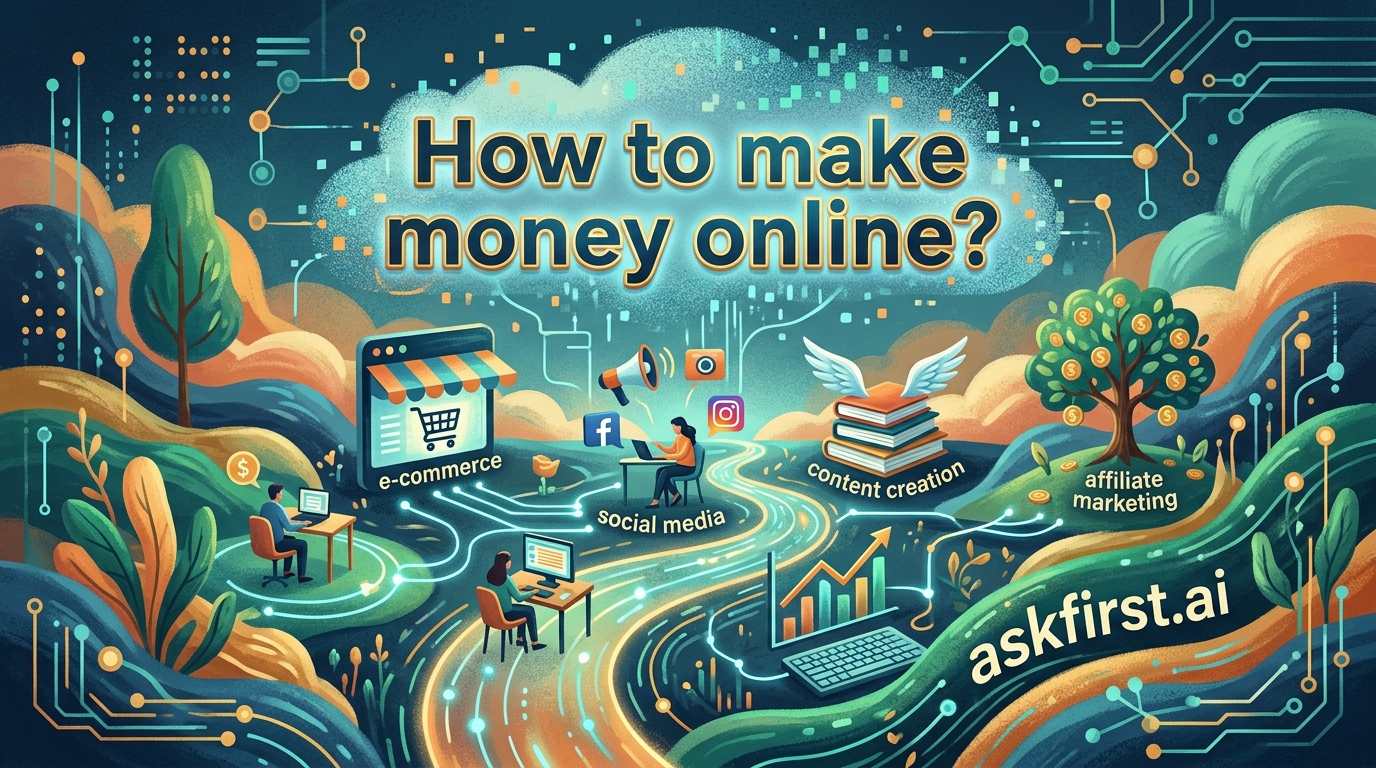
Generating income online is no longer a fringe activity or a digital experiment; it has become a cornerstone of the modern global economy. In 2026, the landscape of "making money online" has shifted from speculative "get-rich-quick" schemes to robust, skill-based business models that require dedication, strategic planning, and consistent execution. To succeed, one must move beyond the noise of social media influencers promising overnight success and focus on creating genuine value in the digital marketplace.
The Foundation: Content Creation and Personal Branding
The most sustainable way to generate income online today is through the creation of high-value content. Whether through a blog, a YouTube channel, or a niche newsletter, building an audience allows you to leverage "permission marketing"—a concept popularized by Seth Godin in his seminal work, Permission Marketing: Turning Strangers into Friends and Friends into Customers.
- Affiliate Marketing: This involves promoting products developed by others and earning a commission for every sale made through your referral link. Platforms like Amazon Associates or specialized SaaS affiliate programs remain highly profitable if you target a specific niche.
- Monetizing Expertise: If you possess a specialized skill—be it coding, graphic design, or financial planning—you can package that knowledge into digital products. Platforms like Gumroad or Teachable allow creators to sell e-books, templates, or comprehensive video courses directly to their audience.
Freelancing and the "Gig Economy" Professionalism
The freelance market has matured significantly. Gone are the days of competing solely on platforms like Upwork for low-paying tasks. Today, the most successful freelancers operate as "solopreneurs." In his book Company of One, author Paul Jarvis argues that staying small can actually lead to greater freedom and profitability. Instead of scaling a massive agency, focus on becoming a high-end consultant in a specific vertical.
- High-Ticket Freelancing: Focus on high-leverage skills such as Copywriting, UI/UX Design, or AI Automation Implementation. Businesses are currently desperate for experts who can integrate Large Language Models (LLMs) into their existing workflows.
- Building a Portfolio: Your digital presence acts as your resume. A well-structured website showcasing case studies—detailing the problem you solved, the methodology used, and the measurable results achieved—is far more effective than a traditional CV.
E-commerce and Direct-to-Consumer (DTC) Models
E-commerce has evolved beyond simple dropshipping. While the "dropshipping" model popularized by Tim Ferriss in The 4-Hour Workweek remains a valid entry point, the current market favors brands that offer unique value propositions.
- Print-on-Demand (POD): This allows for low-risk testing of creative designs on apparel or home goods without holding inventory. It is an excellent way to validate a brand before committing to manufacturing.
- Private Labeling: For those with more capital, sourcing high-quality products from manufacturers and branding them as your own remains the gold standard for long-term equity. The focus here is on Customer Lifetime Value (CLV). Use tools like Shopify to build a storefront, but focus your energy on customer retention rather than just one-off sales.
The Role of Investing and Digital Assets
Money can also be made by deploying capital into digital assets. This is the "passive" side of the online economy, though it requires significant upfront research.
- Domain Flipping and Website Acquisition: Buying undervalued websites, optimizing their SEO and conversion rates, and then reselling them is a legitimate business model. Websites like Flippa or Empire Flippers serve as marketplaces for these digital assets, where valuations are often based on a multiple of monthly net profit.
- Content Assets: Investing in high-quality articles or videos that act as "evergreen" traffic drivers. Once an article ranks for a high-intent search query on Google, it can generate passive affiliate revenue for years with minimal maintenance.
Strategic Execution: The "Three-Pillar" Framework
To avoid burnout and ensure financial growth, structure your online efforts using a three-pillar framework:
- Traffic Generation: You must master one traffic source. Whether it is SEO (Organic Search), Paid Ads (Meta/Google), or Social Media (Short-form video), choose one and become an expert before diversifying.
- Conversion Optimization: Traffic is useless without a mechanism to capture it. Build an email list using lead magnets (free checklists, mini-courses). As Ryan Deiss notes in Digital Marketing for Dummies, the "money is in the list" because it allows you to communicate with your prospects repeatedly without relying on platform algorithms.
- Retention: It is significantly cheaper to sell to an existing customer than to acquire a new one. Focus on building community, providing exceptional support, and creating a feedback loop that improves your offering over time.
Conclusion
Making money online is not about finding a "hack" or a shortcut; it is about applying fundamental business principles to the digital environment. By focusing on creating value, building an audience, and leveraging the right technical platforms, you can build a sustainable income stream that is independent of location. Whether you choose to be a creator, a freelancer, or an e-commerce entrepreneur, the key is to start small, validate your ideas quickly, and scale only when you have a proven, repeatable process. Success in this domain is a marathon, not a sprint, and those who prioritize long-term brand equity over short-term gains are the ones who ultimately thrive.