The Paradox of Workplace Camaraderie
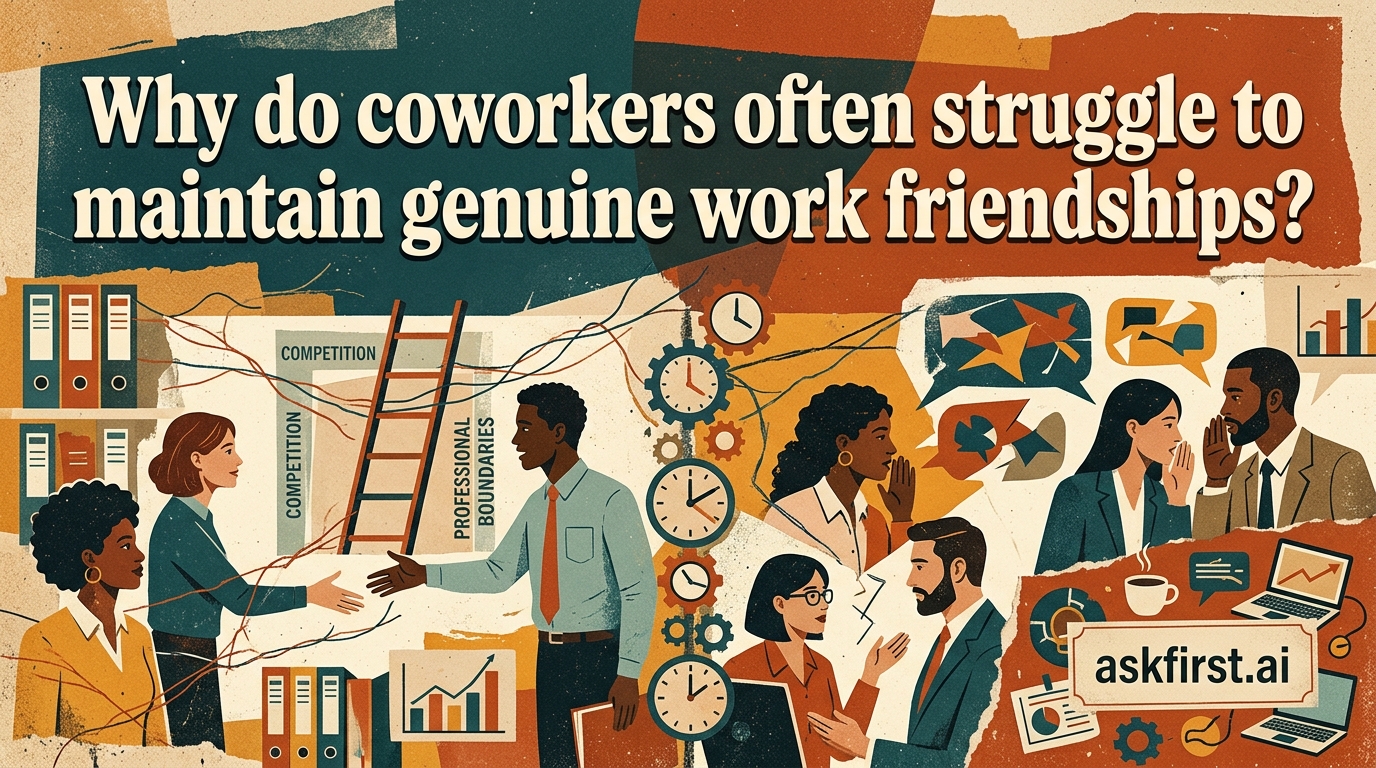
Building genuine friendships in a professional environment is a complex endeavor fraught with psychological barriers. While humans are social creatures by nature, the office functions as a structured ecosystem where personal boundaries and professional ambitions frequently collide. The struggle to cultivate authentic connections often stems from the inherent tension between collaboration and competition, a dynamic that remains consistent across various industries.
The Competitive Core: The Promotion Trap
At the heart of the difficulty lies the scarcity mindset regarding career advancement. When two colleagues work in proximity, there is an unspoken awareness that promotions, bonuses, and accolades are limited resources. Even in the most supportive teams, the cognitive bias toward self-preservation can subconsciously cast a shadow over interpersonal trust. This phenomenon, often termed the 'zero-sum career outlook,' creates a subtle barrier that prevents complete vulnerability, which is a prerequisite for genuine friendship.
Psychological Safety and Evaluation Anxiety
Genuine friendships require a level of authenticity where one can express doubts, personal failures, or unorthodox ideas without fear of judgment. However, the professional workplace is, by design, an environment of evaluation. Whether it is through formal performance reviews or the informal judgment of peers, coworkers are constantly being assessed. This leads to the 'professional persona'—a curated version of the self that acts as a protective shield. When individuals interact primarily through these personas, the emotional depth required for a true friendship remains elusive.
The Boundary Conflict
Work friendships often collapse under the weight of blurred boundaries. In a personal friendship, interactions are voluntary and centered on mutual interest. In a work friendship, the interaction is mandatory and centered on common tasks. When these two spheres overlap—such as when a friend is also a supervisor, or when a collaborative project goes poorly—the relationship faces immense strain. Sociologists often point to 'role conflict' as a primary driver of friendship degradation in the office. If a friend must hold another friend accountable for a missed deadline, the dynamic shifts from egalitarian support to hierarchical authority, which often causes the friendship to wither.
Structural Limitations on Spontaneity
Genuine bonds are often forged through unscripted, spontaneous experiences. Work, conversely, is characterized by schedules, agendas, and pre-planned meetings. The lack of 'low-stakes' time—the spontaneous moments of shared leisure that occur outside of a task-oriented environment—makes it difficult for trust to mature. Without these organic opportunities for bonding, friendships often stagnate at the level of 'collegial acquaintance,' characterized by pleasantries rather than deep connection.
How to Foster Authentic Connections
Despite these challenges, it is entirely possible to cultivate meaningful professional relationships. Success usually requires a few intentional strategies:
- Cultivate Emotional Transparency: While maintaining professionalism, sharing small, humanizing anecdotes helps break down the professional persona.
- Seek Shared Values Over Shared Tasks: Focus on finding common ground in personal values, hobbies, or interests that exist outside of the office hierarchy.
- Establish Clear Boundaries: Openly discussing how the professional relationship will function during high-stress periods can mitigate the risk of conflicts turning into personal resentment.
- Prioritize Mutual Growth: Shift the dynamic from competition to mentorship, where both parties are actively invested in the other person's success.
The Future of Work Relationships
As the landscape of labor shifts toward hybrid and remote models, the nature of these friendships is evolving. The lack of proximity has removed some of the daily, friction-heavy interactions, but it has also made the intentionality of connection more critical. Research suggests that the quality of work friendships is directly correlated with employee retention and overall mental well-being. Therefore, moving past the superficiality of office banter is not merely a social bonus; it is a vital component of a resilient and healthy professional life. By acknowledging the structural constraints and actively working to bypass them, professionals can transform their workplace from a mere source of income into a foundation for lasting, significant interpersonal connections.