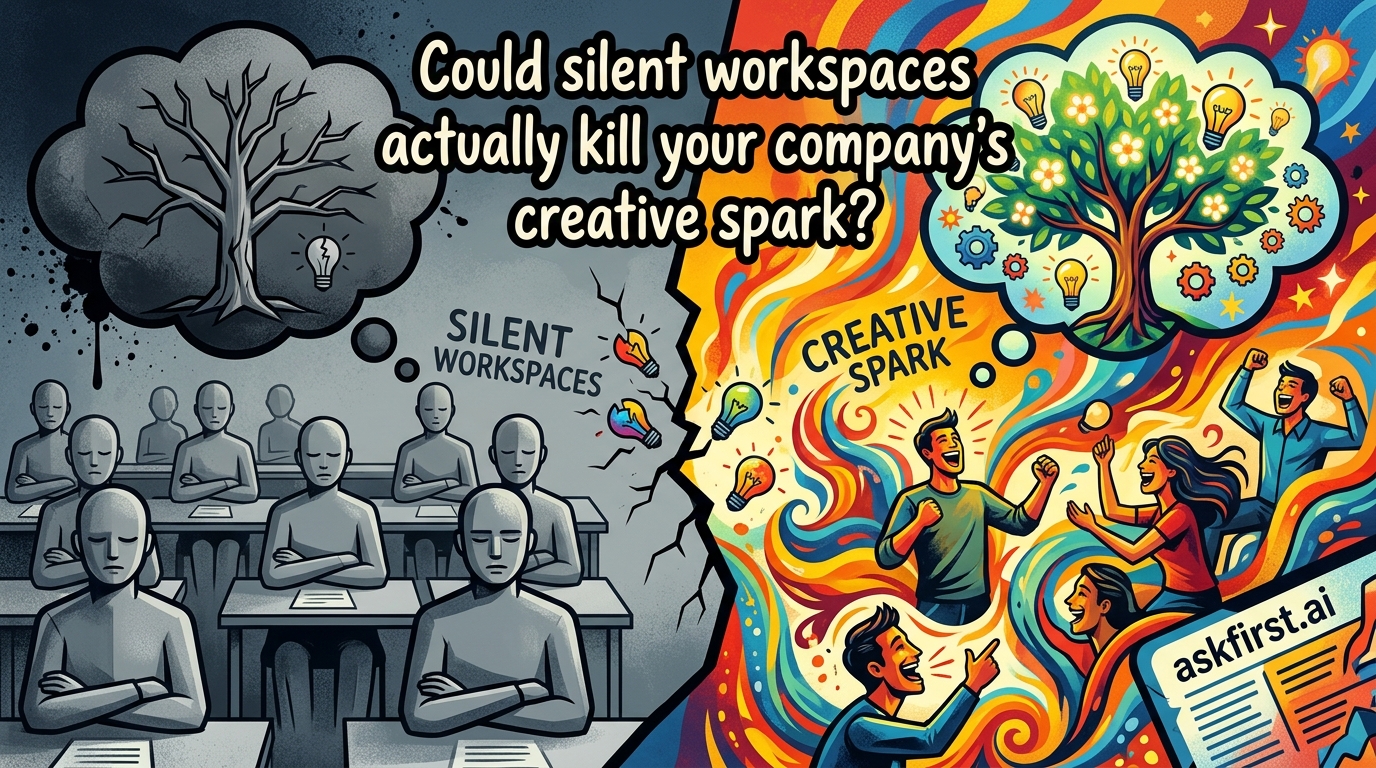
The Paradox of Silence: Is Productivity Stifling Innovation?
In the modern corporate landscape, the pursuit of focus has often been equated with the eradication of noise. Open-plan offices have been scrutinized for their distracting chatter, leading companies to implement 'quiet zones' or enforce policies of near-total silence. However, recent organizational psychology suggests that while silence may indeed boost routine task efficiency, it often acts as a silent assassin for the creative spark that drives innovation. When an office becomes a library, it loses its role as an incubator for the spontaneous collisions that fuel breakthrough ideas.
The Science of Cognitive Resonance
Human creativity is rarely a solitary endeavor, even for the most introverted thinkers. Research in cognitive science indicates that 'ambient noise'—often referred to as 'The Coffee Shop Effect'—can actually foster divergent thinking. Moderate levels of background noise (around 70 decibels) have been shown to encourage a slight reduction in cognitive processing precision, which effectively nudges the brain away from rigid, linear thinking toward more abstract and creative connections. In contrast, absolute silence forces the brain to focus intently on granular tasks, which creates a psychological 'tunnel vision' that suppresses lateral associations.
The Power of Spontaneous Friction
Innovation is a byproduct of collision. When employees are strictly sequestered in silent environments, they miss out on the 'incidental' information exchange. Think of this as organizational osmosis:
- Cross-Pollination: Hearing a snippet of a colleague’s conversation can provide the missing piece to a puzzle another team has been struggling with for weeks.
- Social Cohesion: Informal chatter humanizes colleagues, reducing the transactional nature of work and building the psychological safety necessary for radical idea-sharing.
- Energy Buffering: A silent office can feel oppressive and lonely. A low hum of collaborative activity provides a sense of collective purpose, which boosts morale and prevents the fatigue associated with isolation.
Busting the Myth of 'Deep Work' Exclusivity
While Cal Newport’s concept of 'Deep Work' is vital for execution, the creative phase of projects requires a different environment. Organizations often fall into the trap of applying the 'Deep Work' mandate to all hours of the day. This is a fatal strategic error. Creativity thrives in high-stimulus environments where ideas can be bounced off others in real-time. If an entire workday is designed for silence, the organization effectively kills the 'incubation' phase of the creative process.
Cultivating 'Dynamic' Workspaces
To balance focus and fire, forward-thinking organizations should consider adopting a 'Dynamic Workspace Architecture.' This is not about choosing between noise and silence, but rather about intentionality.
1. Define Sonic Zones: Create dedicated spaces for silence (Deep Focus Zones) and dedicated spaces for collaborative noise (Innovation Hubs).
2. The 'Soundtrack' Strategy: Experiment with low-level ambient sound in communal areas. Music or gentle conversational white noise can prevent the discomfort of absolute silence while encouraging a relaxed, associative state of mind.
3. Encourage 'Public' Thinking: Normalize the practice of brainstorming in open areas rather than hidden meeting rooms. When people observe the creative process in action, it lowers the barrier for others to join in.
The Long-Term Impact on Organizational Culture
An environment defined by mandatory silence eventually manifests as a culture of fear. When employees are afraid to speak lest they disrupt the 'quiet,' the threshold for sharing 'half-baked' or 'risky' ideas rises significantly. Creativity dies where feedback becomes a chore that requires booking a room and sending a formal calendar invite. In contrast, companies that embrace a balanced soundscape foster a culture of fluidity. Ideas are treated as living, breathing entities that require constant ventilation to grow.
In conclusion, while silent workspaces are useful for short-term output, they are likely the enemies of long-term innovation. If a company aims to be a market leader, it must embrace the productive messiness of human interaction. Silence is a luxury of execution, but noise is the fuel of discovery. By thoughtfully managing the acoustic landscape, leaders can ensure that their teams are not just working harder, but thinking bolder.