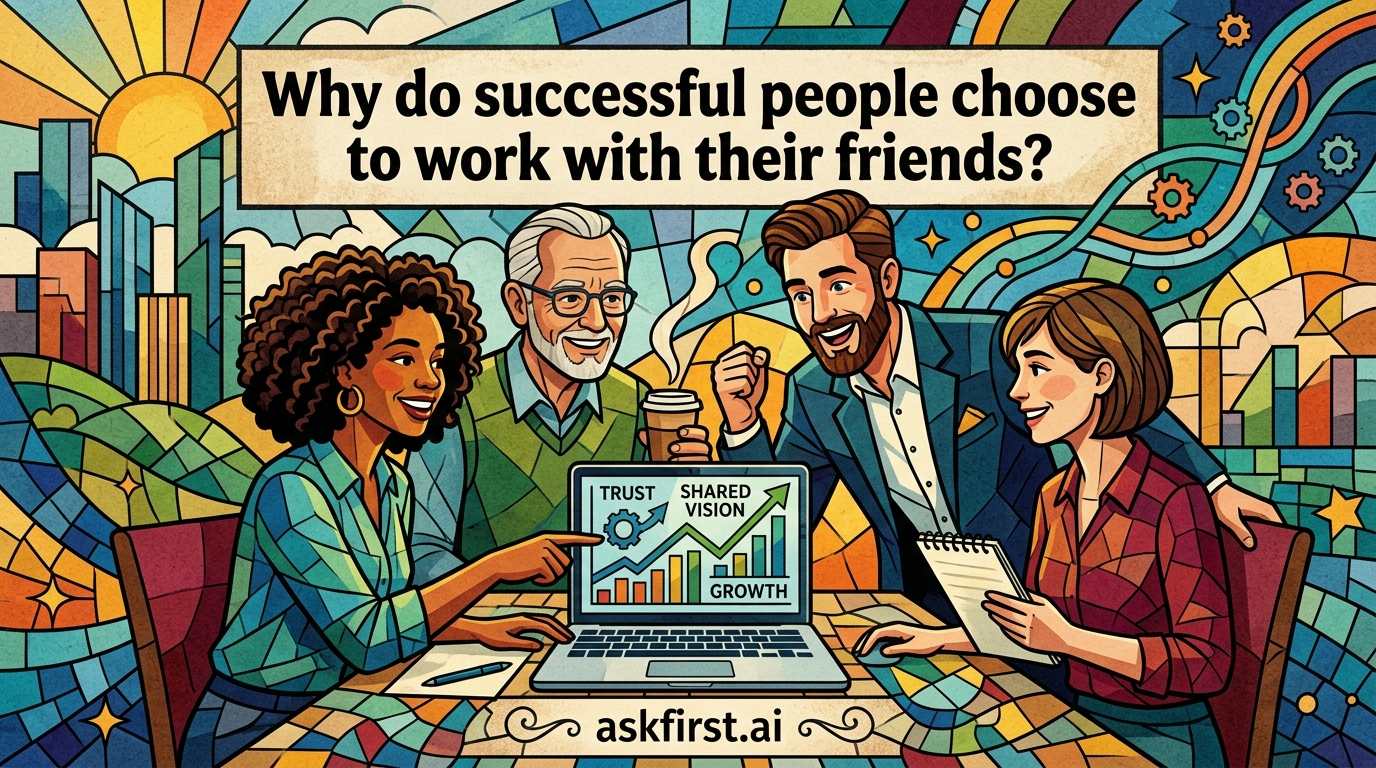
The Synergy of Trust: Why High Achievers Hire Friends
It is often said in professional circles that one should never mix business with pleasure. However, a closer look at the trajectories of the world’s most successful entrepreneurs and executives reveals a recurring theme: the deliberate inclusion of trusted friends within the professional inner circle. This is not merely a matter of convenience; it is a calculated strategy rooted in psychology, efficiency, and long-term risk mitigation. When individuals with shared histories align their professional goals, they unlock a unique form of human capital that is nearly impossible to replicate with strangers.
1. The Power of Radical Transparency
At the core of professional failure often lies poor communication. In traditional corporate environments, professional masks are worn, and feedback is softened through layers of bureaucracy. In contrast, friendships are built on a foundation of honesty. When friends work together, the communication barrier is significantly lowered. Radical transparency becomes the norm rather than the exception. Because the parties already understand each other’s temperaments, linguistic styles, and moral frameworks, they can circumvent the 'politeness tax'—the time wasted on diplomatic hedging—and proceed directly to solving the problem at hand. This velocity of truth is a massive competitive advantage in fast-moving industries.
2. Psychological Safety and Resilience
Innovation is inherently messy. It requires taking risks, facing failure, and enduring high-stress periods. Psychological safety, as researched by experts like Amy Edmondson, is the belief that one will not be punished for making a mistake. In friendships, this safety net is pre-installed. The fear of judgment, which causes employees to hide errors or suppress creative ideas, is largely absent when working with a trusted peer. High achievers thrive when they know that their teammates are looking out for their best interests, not just their own corporate reputation. This shared vulnerability fosters a culture of rapid iteration and resilience, essential components of long-term success.
3. Shared Value Alignment and Cultural Cohesion
Culture is the invisible glue that holds an organization together. It is notoriously difficult to instill core values into a workforce, especially during rapid expansion. When leaders build teams with existing friends, they are effectively 'outsourcing' the cultural vetting process. Friends usually share a worldview, a common moral compass, and an ingrained understanding of one another's professional integrity. This pre-existing alignment eliminates the need for lengthy cultural assimilation periods. Research in organizational behavior suggests that organizations with high value-congruence among key stakeholders experience significantly lower turnover and higher employee engagement. Working with friends guarantees this baseline level of synchronization from day one.
4. Efficient Resource Mobilization
Time is the most valuable commodity for the successful. Building rapport and trust with a new colleague can take months or even years of trial and error. By tapping into a pre-existing social network, high achievers jumpstart this process. The implicit knowledge of who is good at what, who folds under pressure, and who brings unique creative insights allows for near-instantaneous delegation. This is essentially 'social capital arbitrage.' Successful people identify the best talent in their social circle and leverage those connections to solve complex puzzles, bypassing the costly and unreliable traditional recruitment funnels.
5. Managing the 'Dark Side' of Collaborative Friendships
While the advantages are substantial, the transition from friend to professional partner requires intentional boundaries. To maintain the long-term viability of these arrangements, high achievers often implement specific structures:
- Defining Roles Clearly: Even best friends must define spheres of authority to avoid role conflict.
- Standardized Evaluation Metrics: Success must be measured against objective goals rather than personal feelings.
- The 'Exit Clause' Mindset: Professional agreements are treated with the same seriousness as legal contracts, ensuring that the friendship remains protected if business outcomes turn sour.
Conclusion: The Future of Collaborative Enterprise
As the world of work becomes increasingly decentralized and reliant on remote, cross-functional teams, the value of deep, authentic trust increases exponentially. Successful people gravitate toward friends not just for comfort, but because friendship is a proxy for proven reliability. In a global economy where talent is abundant but genuine integrity is rare, building a professional engine powered by friends is a masterstroke of strategy. It is not about abandoning professional standards; it is about elevating them by aligning them with the most powerful human connection available: trust. Those who master the balance of friendship and professional rigor are often the ones who redefine industries for decades to come.