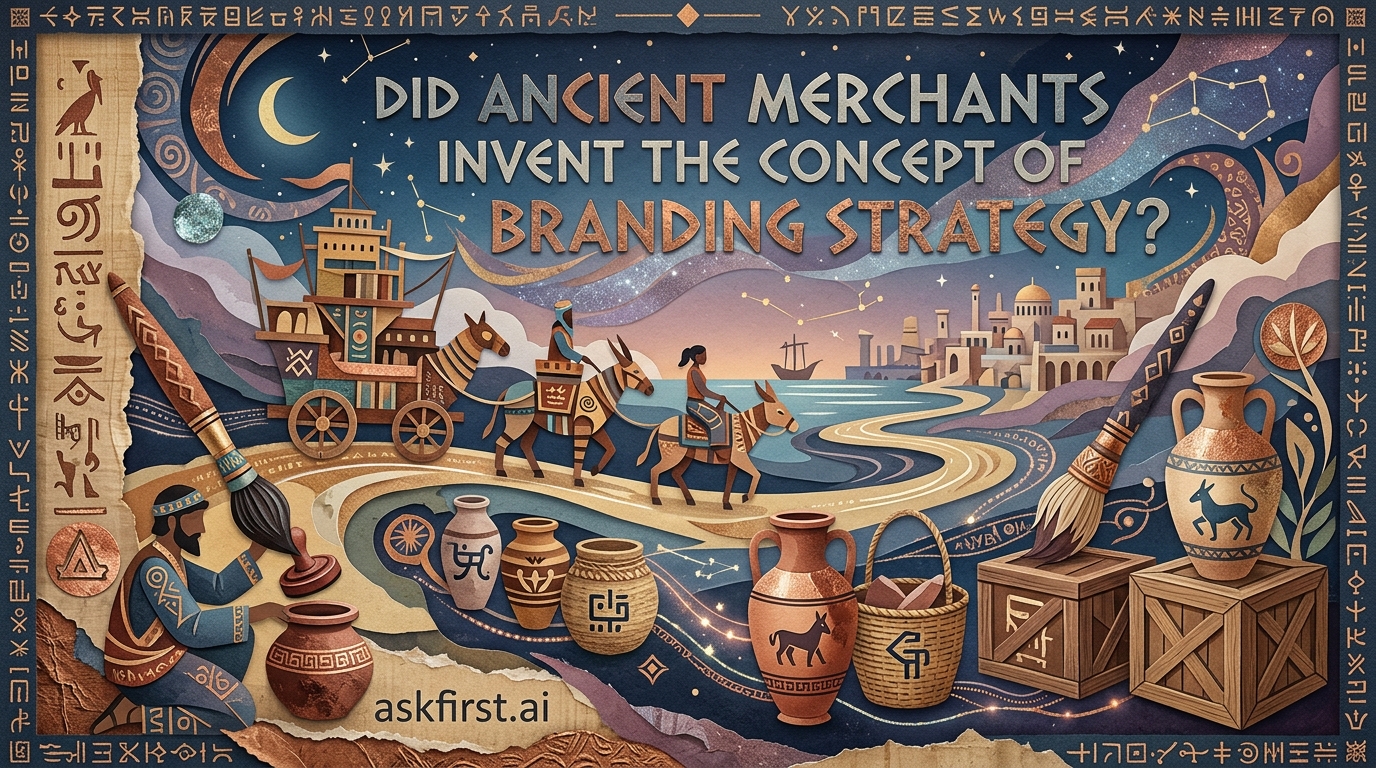
The notion that branding is a modern invention created by Madison Avenue advertising executives is a profound misunderstanding of human commerce. In reality, the strategic use of brands to denote quality, ownership, and reputation is an ancient practice that stretches back thousands of years, long before the digital age or mass media. To understand branding, one must realize that it is essentially a psychological tool designed to bridge the gap of trust between a producer and a distant buyer.
The Origins: From Livestock to Luxury Goods
Etymologically, the word 'brand' stems from the Old Norse word 'brandr,' meaning 'to burn.' Its earliest application was remarkably literal: livestock owners used heated irons to sear a specific symbol into their animals. This practice served two primary purposes. First, it allowed for easy identification of ownership in a shared landscape. Second, and perhaps more importantly for the history of business, it established a reputation. If a specific rancher was known for raising healthy, high-quality cattle, that brand became a shorthand for reliability.
This principle moved quickly from the barnyard to the marketplace. Archaeological evidence from Ancient Mesopotamia and Ancient Egypt reveals the use of distinct maker marks on pottery, bricks, and amphorae. As trade networks grew across the Mediterranean, merchants realized that goods produced in one region might be of superior quality to those produced elsewhere. To protect their interests and command higher prices, master artisans began inscribing their names or unique symbols onto their products. This was the infancy of the 'premium brand.'
Psychological Anchors and the Trust Economy
Ancient commerce was often hazardous and decentralized. A merchant in Rome buying olive oil from a dealer in Spain had no way to verify the contents of every sealed vessel. Branding solved this problem. By stamping an amphora with a specific merchant’s mark, the seller provided a guarantee. If the oil was pure, the consumer learned to associate the mark with quality. If the oil was rancid, the mark became a warning. This is the exact psychological mechanism underlying modern branding: reducing risk and simplifying choice for the consumer.
In Ancient Pompeii, excavations have uncovered signs painted on exterior walls that acted as primitive billboards. These signs promoted specific shops and taverns, often using clever slogans that emphasized the 'value' or 'experience' found within. Even ancient gladiator events utilized 'sponsorships' where wealthy patrons would fund fighters, creating a public association between a brand (the sponsor) and a perceived value (courage, strength, victory).
The Evolution of Reputation as Capital
As civilizations like the Romans refined their trade, branding became sophisticated. Certain pottery types, such as 'terra sigillata,' became highly sought-after status symbols. These were not merely clay bowls; they were objects of refined aesthetic quality produced by established workshops. The name stamped into the base of the bowl functioned exactly like a modern luxury fashion label. It signaled social status, discernment, and wealth. The merchant was no longer selling a utility; they were selling an identity.
Key takeaways regarding ancient branding strategy include:
- Identity Verification: Brands were the primary method of preventing counterfeit goods in antiquity.
- Quality Signaling: Marks acted as an early version of a quality assurance program.
- Customer Loyalty: Merchants recognized that repeat business relied on the recognition of their unique signature or symbol.
- Market Segmentation: Artisans tailored their branding to suit different social strata, effectively creating 'luxury' and 'economy' tiers.
Bridging the Past and the Future
Is modern branding really different? While current technology allows for global reach and instantaneous data tracking, the fundamental objective remains identical to that of an ancient Mesopotamian potter: to establish trust through consistent quality and distinct visual recognition. We have moved from fire-heated irons on cattle to pixels on screens, but the underlying drive to differentiate one's 'value proposition' from the competition is an eternal constant of human economics.
By viewing branding through this historical lens, it becomes clear that business strategy is an inherent byproduct of human connection. It was not 'invented' in the 20th century; it was observed, refined, and codified over millennia. Whether in the forums of Rome or the digital marketplaces of today, the strategy relies on the same pillars: consistency, recognition, and the promise of a superior experience. The story of the brand is truly the story of civilization itself, documenting our perpetual quest for excellence and the need to distinguish the best from the rest.