The Hidden Language of Ancient Commerce
While the modern world relies on complex algorithms and digital surveillance to detect price-fixing, the history of trade reveals a fascinating, albeit clandestine, landscape. The notion that ancient merchants utilized secret codes or linguistic signals to manipulate market prices is not merely a myth but a documented phenomenon embedded in the roots of global economics. Across civilizations ranging from the Mediterranean city-states to the vast silk networks of Asia, traders developed sophisticated methods to bypass transparency.
Linguistic Barriers as Economic Tools
One of the most effective ways merchants "fixed" prices was through the strategic use of obscure dialects or specialized jargon. By conducting transactions in languages or slang incomprehensible to local authorities or competing guilds, they effectively created a closed-loop market. For instance, in the Hanseatic League, German merchants often employed a mix of Low German and regional trade codes to shield their price points from local observers. This linguistic insulation allowed them to coordinate supply levels, thereby keeping prices artificially inflated across various ports without ever leaving a written paper trail that regulators could decipher.
The Use of Cryptographic Symbols and Tally Sticks
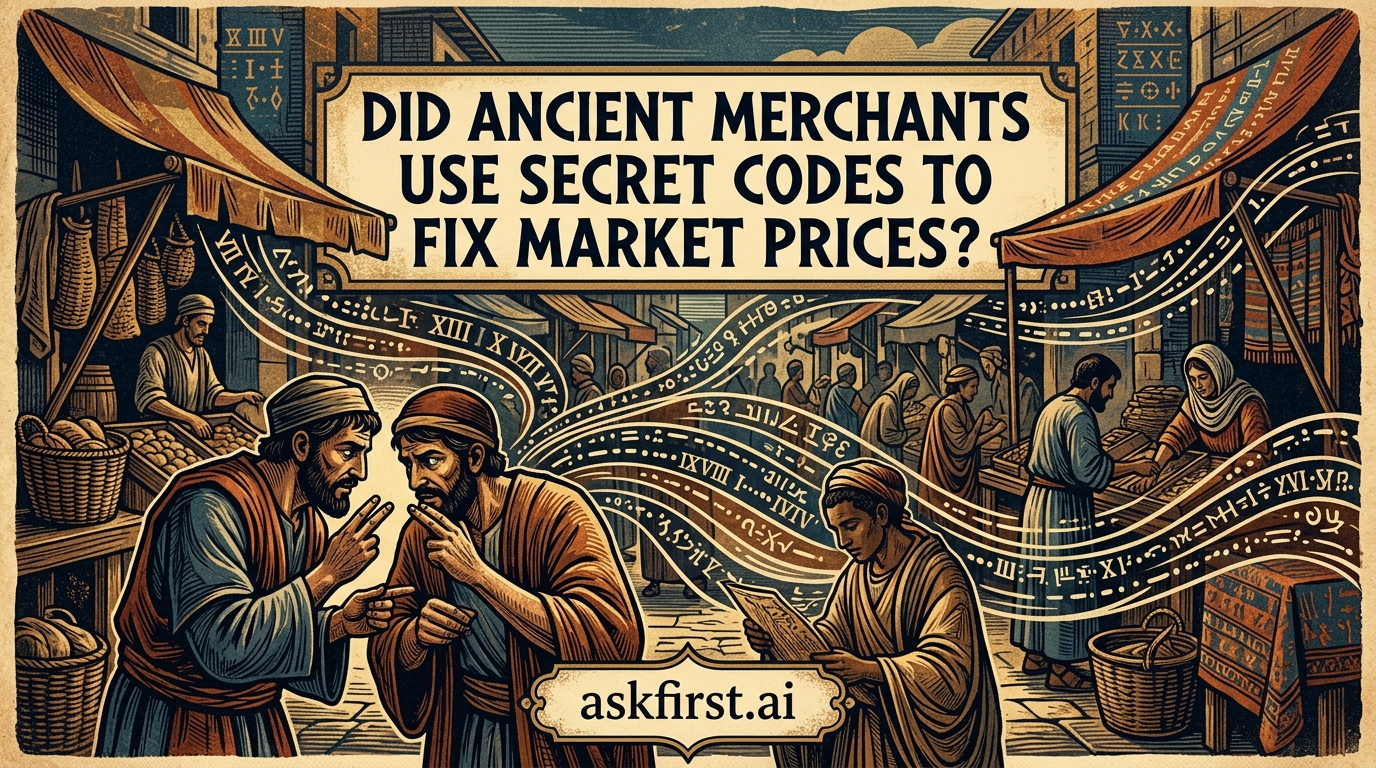
Beyond spoken language, physical tokens served as complex conduits for price negotiation. In ancient Mesopotamia and early Phoenician trade hubs, merchants utilized standardized clay tokens and intricate seal stamps. While these were officially for accounting, evidence suggests that specific combinations of geometric markings on shipping crates functioned as shorthand communication. These codes informed receiving merchants about local market conditions and suggested the "floor price" for the cargo. By embedding these subtle visual cues into shipping documentation, merchants communicated complex market-fixing strategies under the guise of mundane administrative data.
Guilds and Secret Communication Systems
Historical records from the Roman Collegia, or trade guilds, reveal that members were bound by internal oaths that required them to uphold specific pricing standards. To communicate these standards in bustling marketplaces, merchants utilized "signal systems" akin to sign language. A specific arrangement of goods on a stall table, the orientation of a hanging fabric, or even the subtle repositioning of scales could indicate to a fellow guild member whether the prevailing market price was to be maintained or aggressively undercut to squeeze out competition. This practice made price-fixing nearly invisible to external observers because the 'code' was physical and ephemeral, leaving no trace once the market stall closed for the night.
The Ethics and Effectiveness of Coded Trade
It is essential to distinguish between tactical negotiation and organized price-fixing. While some merchants certainly used these methods to survive in volatile economies, others leveraged them to create monopolies. The historical reality of these practices underscores a timeless economic truth: where there is a market, there is an incentive to reduce information transparency. By creating private networks of information, ancient merchants successfully mitigated the risks associated with market fluctuations, often at the expense of the final consumer.
Legacy in the Modern Era
Tracing these ancient patterns explains the origins of modern trade regulations. Laws such as the Sherman Antitrust Act were not born in a vacuum; they were responses to centuries of sophisticated, often hidden, collusion. Understanding that ancient merchants were the original masters of 'market signaling' sheds light on how deeply rooted these behaviors are in human economic systems. The methods changed from clay tokens to high-frequency trading algorithms, but the fundamental drive to control the market through private, coded communication remains a central thread in the tapestry of human commerce.
Conclusion: The Illusion of Transparency
In summary, the history of trade is marked by a perpetual push-and-pull between regulatory oversight and the innovative secrecy of merchants. Ancient traders were far more adept at market manipulation than often credited, utilizing a blend of linguistic, symbolic, and behavioral codes to fix prices. This fascinating reality serves as a reminder that the transparency we value in modern markets is a fragile achievement, built upon the hard-learned lessons of history where silence and secrecy were once the most valuable commodities in the bazaar.