The Power of Anchoring in Consumer Behavior
One of the most potent psychological phenomena driving high-ticket sales is known as Anchoring. In the realm of behavioral economics, anchoring describes the human tendency to rely too heavily on the first piece of information offered (the 'anchor') when making decisions. Once an anchor is set, other judgments are made by adjusting away from that anchor, and there is a bias toward interpreting other information around the anchor.
How Anchoring Functions in Retail
When a customer enters a store or visits an e-commerce site, they often lack a clear reference point for the value of a product. If a retailer presents a high-priced item first, that price becomes the mental benchmark. Subsequent items that are priced lower than the original anchor appear to be 'deals' or significantly more affordable, regardless of their objective value.
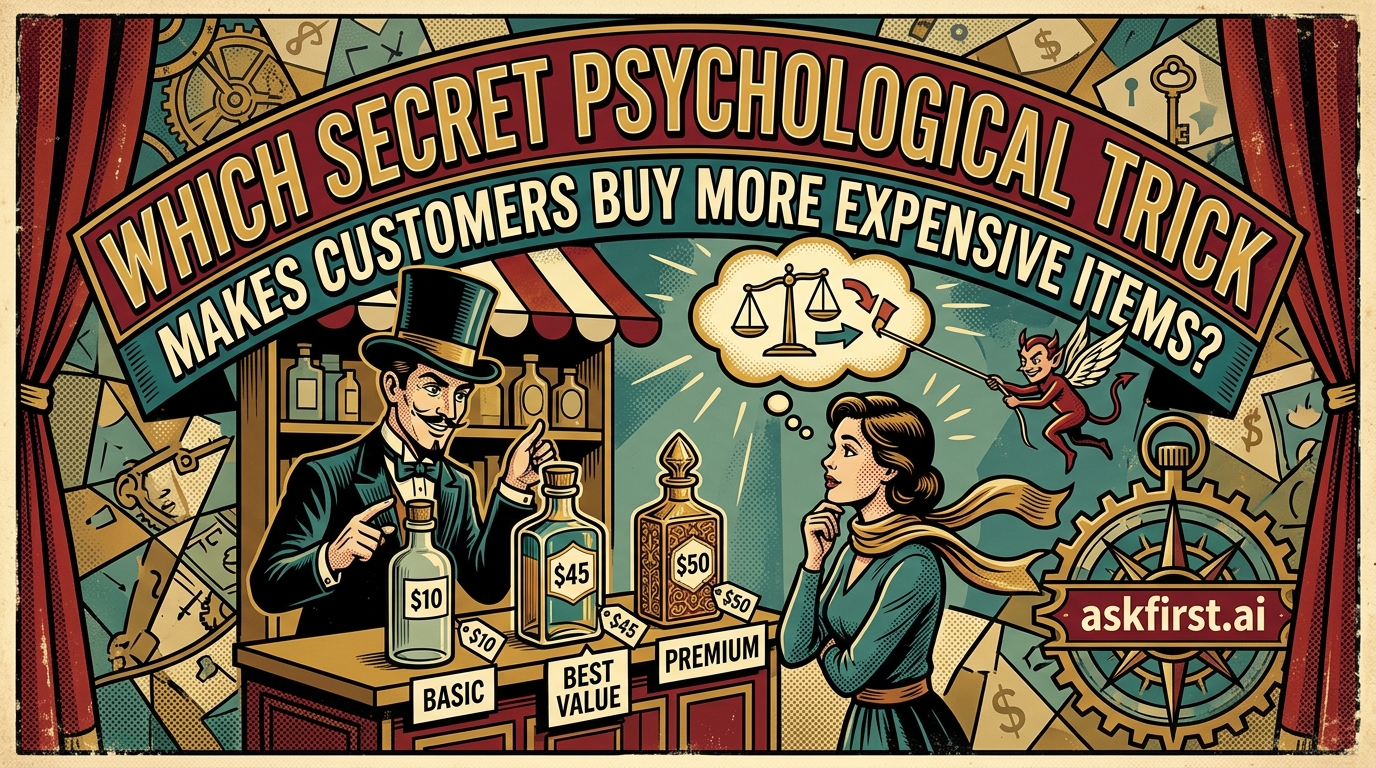
- The Decoy Effect: Often paired with anchoring, the decoy effect involves presenting a third, less attractive option to make a target item seem like the best value. For instance, a small coffee costs $3, a large costs $6, and an extra-large costs $6.50. The jump from large to extra-large feels negligible, pushing the consumer to spend more.
- The Power of Contrast: High-end retailers frequently place their most expensive goods at the front of a catalog or store display. By exposing customers to a $5,000 watch, a $500 watch suddenly seems like a sensible, high-value purchase, whereas it might have seemed expensive if viewed in isolation.
Psychological Underpinnings: Why It Works
Human cognition is inherently limited. The brain seeks cognitive shortcuts to process information rapidly. Anchoring serves as a heuristic—a mental shortcut—that allows consumers to bypass the effort of calculating the 'true' worth of a product. When the brain is presented with a high price, it enters a state of comparative analysis. It does not evaluate the item in a vacuum; it evaluates the item relative to the anchor.
Research published in the Journal of Consumer Research has repeatedly demonstrated that even random numbers can act as anchors. If participants are asked to guess the value of a house after being prompted with a random high number, their estimates skew higher. This highlights the susceptibility of the human mind to external numerical framing.
Strategic Implementation in Modern Business
Businesses leverage these insights through several structured methods:
- Tiered Pricing Models: Software-as-a-Service (SaaS) companies are masters of this. By offering a 'Pro' plan, a 'Business' plan, and an 'Enterprise' plan, the enterprise tier acts as a high-price anchor, making the middle-tier option seem like the 'gold standard' for most users.
- Sale Framing: The classic "Was $200, Now $149" strategy is a textbook example of anchoring. The original price is the anchor, and the discounted price is the adjustment. The perceived gain is magnified by the initial number.
- Prestige Pricing: Luxury brands intentionally set high prices to signal status. Here, the anchor is the brand identity itself, where a high cost is interpreted as a guarantee of quality and exclusivity, triggering a psychological desire to belong to the 'in-group' that can afford such luxury.
Managing the Cognitive Bias
Understanding the mechanism of anchoring empowers both consumers and business owners. For business owners, the lesson is clear: context is everything. The price is never just a number; it is a psychological reference point that dictates how the customer perceives the entire value proposition of the brand. By strategically placing higher-priced items alongside lower-priced offerings, businesses can effectively nudge purchasing behavior toward more profitable outcomes.
For the conscious consumer, the best defense against anchoring is to conduct independent research. By establishing personal value assessments before being influenced by store pricing, individuals can break free from the artificial benchmarks set by marketers. However, as long as humans rely on comparative judgment to navigate complex marketplaces, anchoring will remain one of the most effective tools in the arsenal of modern commerce. It is a fundamental truth of the marketplace: he who sets the anchor defines the value of the transaction.