The Phenomenon of Workplace Emotional Drainage
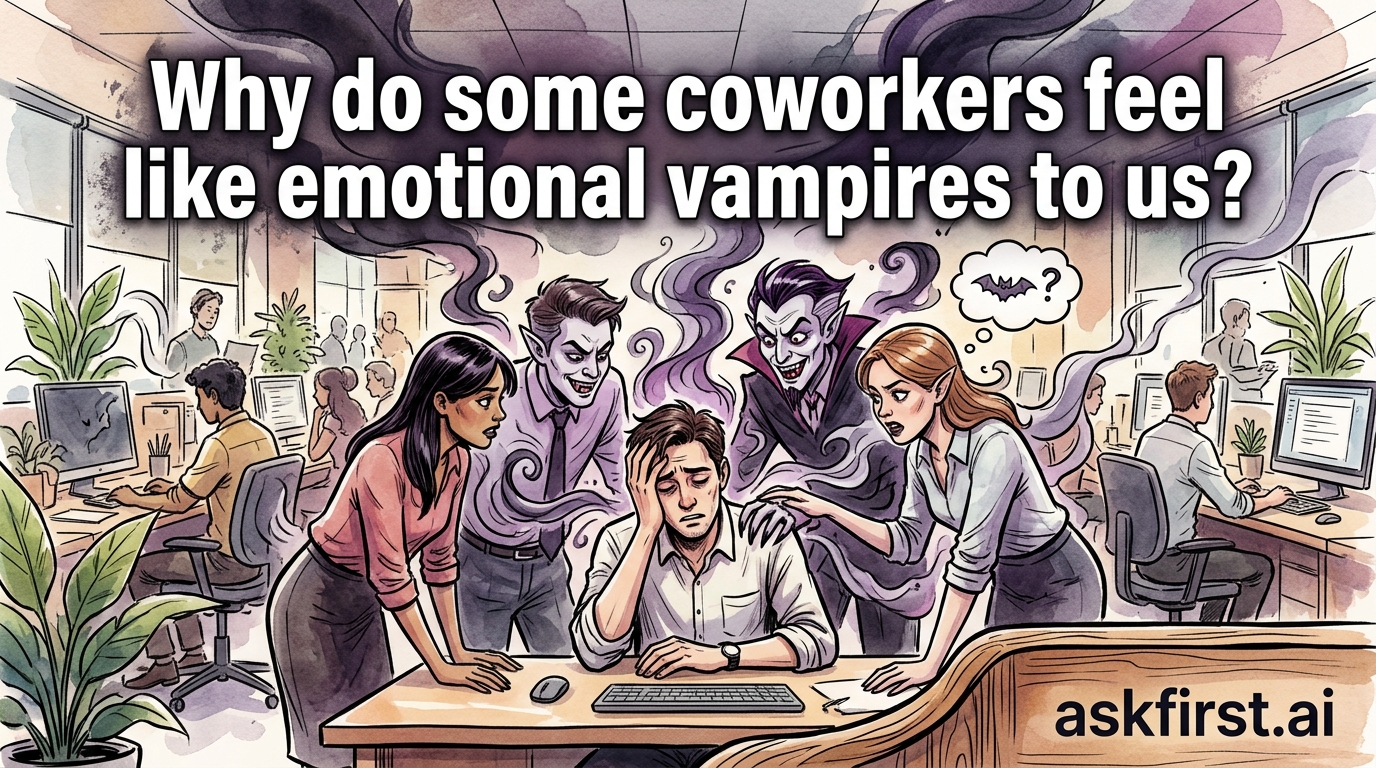
In the professional landscape, the term 'emotional vampire' is frequently used to describe individuals who seem to deplete the energy and mental bandwidth of those around them. While not a clinical diagnosis, the concept rooted in organizational psychology refers to individuals who exhibit habitual behaviors that impose an excessive psychological tax on colleagues. This phenomenon often manifests as chronic negativity, the constant need for validation, or the hijacking of collaborative spaces for personal catharsis. Understanding why these dynamics occur is the first step toward effective workplace boundary management.
Psychological Underpinnings
Emotional drainage at work is rarely the result of a single personality trait. Instead, it is often a confluence of three primary factors:
- Hyper-dependency on External Validation: Some individuals lack an internal metric for their performance or worth. They habitually seek out coworkers to confirm their feelings, solve their dilemmas, or mirror their frustrations. This creates a parasitic dynamic where the 'vampire' gains stability at the expense of the recipient’s productivity.
- The Negativity Bias Feedback Loop: Evolutionary biology dictates that human brains pay more attention to negative information than positive data. Certain coworkers internalize this bias, focusing exclusively on failures or systemic issues. When they share this incessantly, they trigger the stress response in listeners, creating a shared physiological state of anxiety that feels physically exhausting.
- Poor Emotional Regulation Skills: Many professionals lack the capacity for 'self-soothing.' Instead of processing stress individually or through appropriate HR channels, they practice externalization. By unloading their internal turmoil onto whoever is nearby, they essentially use coworkers as an unregulated dumping ground for their unresolved tensions.
The Anatomy of the Interaction
Research into social psychology suggests that humans possess 'mirror neurons' which facilitate empathy. When a coworker constantly displays distress or anger, the observer's own brain often mimics that emotional state to understand it. This is why spending time with a pessimistic colleague can lead to a literal feeling of 'heaviness' or fatigue. This process, known as Emotional Contagion, is a fundamental aspect of human social interaction, yet it becomes destructive when one party is consistently the transmitter and the other is the exhausted receiver.
Identifying the Signs
To navigate these interactions, one must learn to identify the subtle cues that indicate a draining relationship:
- The 'Victim' Narrative: The colleague consistently views themselves as a target of management or office politics, refusing to accept personal agency.
- The Constant Crisis: Every minor issue is escalated to an emergency level, requiring the immediate attention and emotional participation of everyone in the immediate vicinity.
- The Interruption Pattern: They view others' time as a resource for their own relief, often interrupting workflow without checking for availability or boundaries.
Strategies for Professional Protection
Maintaining one's own productivity requires a deliberate approach to emotional labor. Expert recommendations include:
- The 'Bridge' Technique: Acknowledge the colleague briefly, then immediately redirect the conversation toward work-related objectives. For example, 'I can hear that this situation is frustrating; given the current deadline, let’s focus our energy on finalizing the quarterly report.' This establishes that you are a teammate, not a therapist.
- Establishing Physical and Digital Barriers: If the environment allows, utilize headphones or scheduling 'focus blocks' in shared calendars. These signals are non-verbal indicators that you are not available for non-essential interaction.
- Neutralizing the Loop: Avoid 'over-empathizing.' While kindness is a virtue, excessive agreement with a chronically negative coworker only validates their behavior. By remaining neutral and objective, you strip the interaction of the emotional fuel that the person is seeking.
Conclusion
Feeling drained by a coworker is not a sign of personal weakness, but rather a indicator that professional boundaries have been breached. By understanding that this behavior often stems from an individual's inability to self-regulate, rather than a personal slight, employees can shift from being passive victims of emotional contagion to active managers of their own professional environment. Cultivating emotional intelligence is as much about protecting one’s own energy as it is about fostering team cohesion. When individuals take responsibility for their own emotional regulation, the entire workplace culture shifts toward higher efficiency and improved mental wellness.