The Enclothed Cognition Effect: How Apparel Shapes Career Valuation
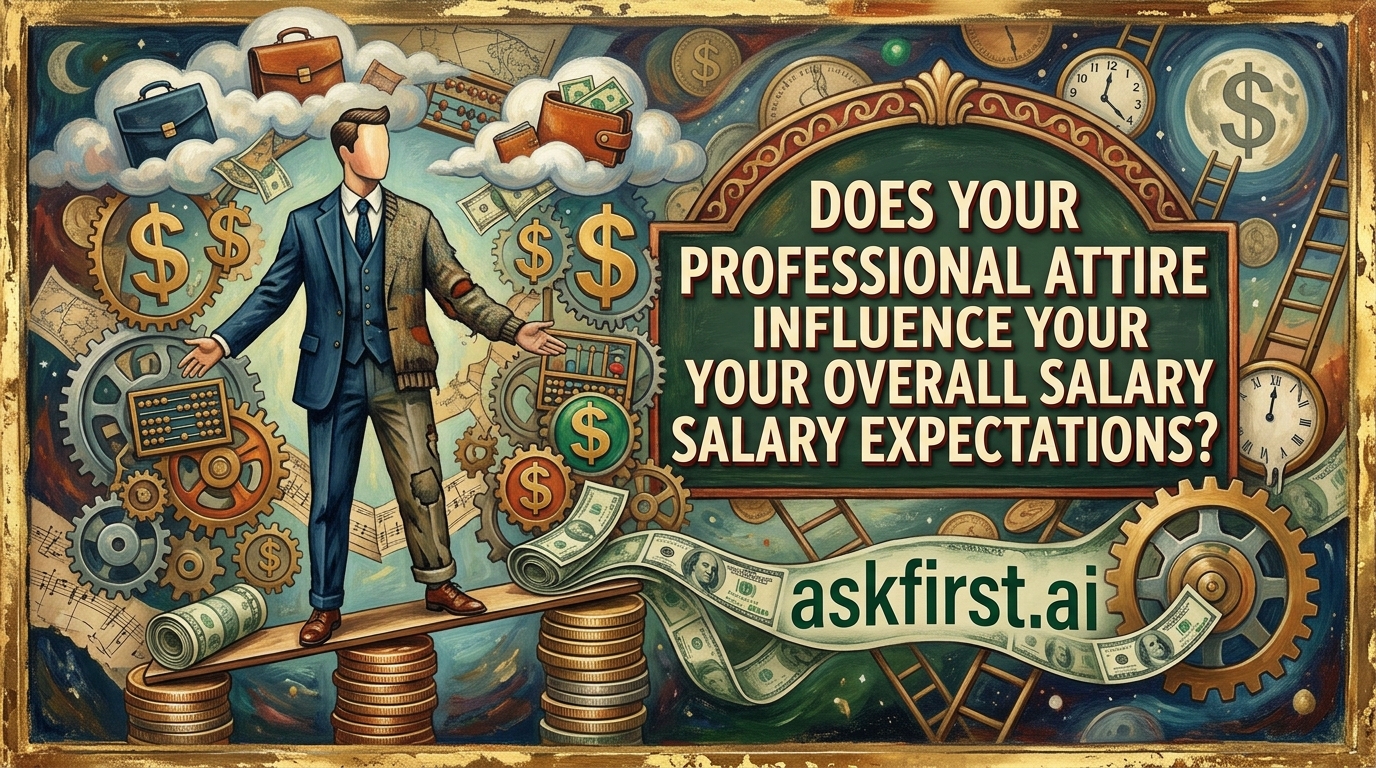
Professional attire acts as a silent signaling system in the workplace. It functions as a form of social currency, conveying competence, attention to detail, and alignment with corporate culture. The psychological phenomenon known as 'enclothed cognition' posits that what an individual wears influences their cognitive processes and how others perceive their professional worth. When an employee dresses with intention, they often trigger a subconscious heuristic in observers that correlates sartorial sophistication with high-level problem-solving ability.
The Psychology of First Impressions
Human beings are hardwired to make snap judgments based on visual cues. Research in behavioral psychology suggests that within milliseconds of meeting someone, the brain evaluates their status and trustworthiness. When a professional walks into a boardroom wearing attire that signifies status and rigor, observers are statistically more likely to assign that person a higher 'human capital' value. This perceived value is frequently the bedrock upon which initial salary negotiations are constructed. If an individual appears 'expensive' or 'authoritative,' the cognitive bias of the observer often adjusts their estimation of that person’s worth upward.
Breaking Down the Influence of Style on Negotiation
- The Authority Factor: Tailored, high-quality garments project stability. A well-fitted suit or a professional ensemble communicates that the wearer respects their craft, which clients and hiring managers interpret as an indicator of future performance consistency.
- The Signaling Theory: In economic terms, signaling theory suggests that individuals use observable traits to communicate hidden information. Dressing the part is a 'costly signal' that indicates a willingness to invest in one's own professional development, thereby justifying higher compensation brackets.
- Consistency Bias: Once an image of professional excellence is established, managers are less likely to challenge salary expectations because the visual narrative aligns with a high-performance profile.
Why Attire Matters More Than Ever
In an increasingly digital professional landscape, visual presentation remains the primary touchpoint for non-verbal communication. Even in virtual settings, the choice of a professional shirt or a structured jacket impacts how an interviewer or stakeholder evaluates leadership potential. Studies indicate that employees who prioritize professional appearance often experience:
- Higher Confidence Levels: When one dresses for success, personal posture often improves, leading to more assertive communication styles during salary discussions.
- Increased Perceived Competence: Observers associate 'sharp' dressing with superior organizational skills and strategic thinking.
- Better Relationship Building: Matching the professional standard of an organization fosters an immediate sense of belonging and cultural fit, reducing the friction often found in salary negotiation stages.
Mitigating Common Myths
One common misconception is that skills alone dictate salary. While technical proficiency is the foundation, it is the presentation of that skill set that creates leverage. Talent that is packaged professionally is perceived as more accessible and ready for high-stakes responsibilities. Ignoring the impact of attire is often equated to ignoring the 'packaging' of a product; even the best product on the market struggles to fetch a premium price if it is presented in an unpolished manner. This does not mean one needs expensive designer clothing; rather, it emphasizes the importance of intentionality, cleanliness, and context-appropriate grooming.
Developing a Professional Sartorial Strategy
To leverage attire for salary growth, professionals should adopt a strategy of 'contextual excellence.' This means researching the professional standards of the desired industry and elevating one’s appearance slightly above the average standard. By projecting an image that is 10% more refined than the target cohort, individuals naturally position themselves as candidates for advancement. This 'aspirational aesthetic' creates a visual path for decision-makers to follow, subconsciously nudging them toward the conclusion that a higher compensation package is commensurate with the professional presence displayed.
Ultimately, attire is a tool of perception management. When used wisely, it does not merely complement a professional's resume; it amplifies it. By recognizing the subtle psychological impact of clothing on the valuation of human labor, professionals gain an edge in negotiation, ensuring that their compensation matches not just their output, but the high-caliber identity they project to the world.