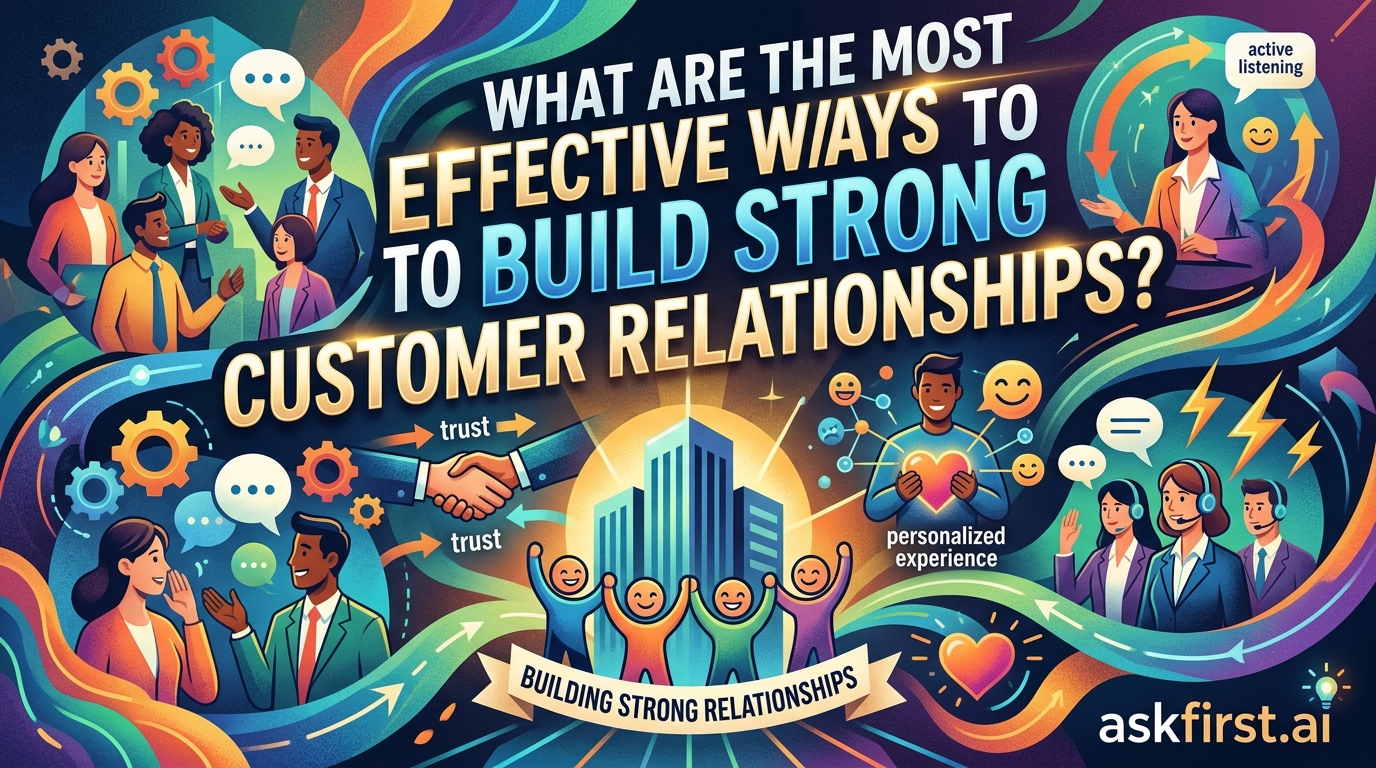
Building enduring customer relationships is the cornerstone of sustainable business growth in the modern, hyper-competitive marketplace. In an era where switching costs are low and consumer expectations are at an all-time high, companies can no longer rely solely on product quality to secure loyalty. Instead, they must cultivate deep, trust-based connections that turn one-time buyers into lifelong brand advocates. This process requires a shift from transactional thinking to relationship-centric strategies.
1. Radical Transparency and Ethical Engagement
Trust is the currency of the modern economy. According to Rachel Botsman in her seminal book Who Can You Trust?, trust is a fundamental mechanism that bridges the gap between what is known and what is unknown. For a business, this means being radically transparent about processes, pricing, and even shortcomings.
When a company experiences a service outage or a product defect, the "spin" approach is a relic of the past. Modern consumers value honesty. By acknowledging issues proactively—much like the way Patagonia has built its brand around radical supply chain transparency—a business demonstrates that it values the customer’s intelligence more than it fears a temporary PR hit. Providing clear, jargon-free communication builds a psychological safety net that encourages customers to stay loyal even when mistakes occur.
2. Personalization Through Data-Driven Empathy
True personalization goes beyond merely inserting a customer’s first name into an email subject line. It is about anticipating needs before they are explicitly stated. In The Effortless Experience by Matthew Dixon, Nick Toman, and Rick DeLisi, the authors argue that customers value ease of interaction above almost all else.
To achieve this, companies must leverage data analytics to build a 360-degree view of the customer journey. For example, a subscription-based software company might use behavioral data to notice that a user hasn't logged in for two weeks. Instead of sending a generic "we miss you" message, the company could send a personalized tutorial on a feature that directly solves a problem that specific user was struggling with during their last session. This is empathy in action: using technology to show the customer that you are paying attention to their specific success metrics.
3. The Power of Consistent Multichannel Communication
Relationship building is a marathon, not a sprint. Consistency in tone, frequency, and value across all touchpoints—social media, email, customer support, and in-person interactions—is vital. If a brand presents as playful and informal on TikTok but cold and bureaucratic in its email support, the resulting cognitive dissonance erodes trust.
Effective organizations utilize a unified CRM (Customer Relationship Management) system to ensure that every department has context. When a customer calls for support, they should not have to repeat their history to the agent. A seamless experience demonstrates that the organization is organized and respects the customer’s time. As noted by Simon Sinek in Start with Why, when a company communicates its values consistently across every channel, it attracts customers who believe in the same things, creating a community rather than just a customer base.
4. Creating Emotional Resonance Through Shared Values
People gravitate toward brands that make them feel like part of a tribe. This is the concept of "Tribal Marketing," popularized by Seth Godin. To build a strong relationship, a business must stand for something beyond its profit margin.
Consider how brands like REI foster relationships: they don't just sell camping gear; they advocate for environmental conservation and outdoor access. By aligning with the values of their customer base, they create an emotional hook that transcends price. When a customer feels that their purchase supports a larger, positive movement, the relationship shifts from a simple exchange of currency for goods to a partnership in shared identity.
5. Proactive Feedback Loops and Iterative Growth
A relationship is a two-way street. The most effective way to strengthen a bond is to show the customer that their voice actively shapes the business. Implementing a "Voice of the Customer" (VoC) program is essential. This involves more than just sending out Net Promoter Score (NPS) surveys; it requires closing the loop.
If a customer provides feedback, they should be informed when that feedback leads to a change. For instance, if a group of users requests a specific software integration, and the company eventually releases it, they should send a personalized message to those specific users saying, "You asked, we listened." This creates a powerful feedback loop that validates the customer’s importance and makes them feel like a co-creator of the brand.
Conclusion
Building strong customer relationships is an intentional, iterative process that requires moving past the transactional mindset. By prioritizing radical transparency, investing in data-driven empathy, maintaining consistent communication across all channels, aligning with shared values, and actively involving customers in the development of the brand, businesses can move from mere service providers to trusted partners.
As the landscape of commerce continues to evolve, the businesses that succeed will be those that treat every interaction as an opportunity to deepen a human connection. Trust, once earned through consistent, value-driven actions, becomes the most powerful competitive advantage an organization can possess.