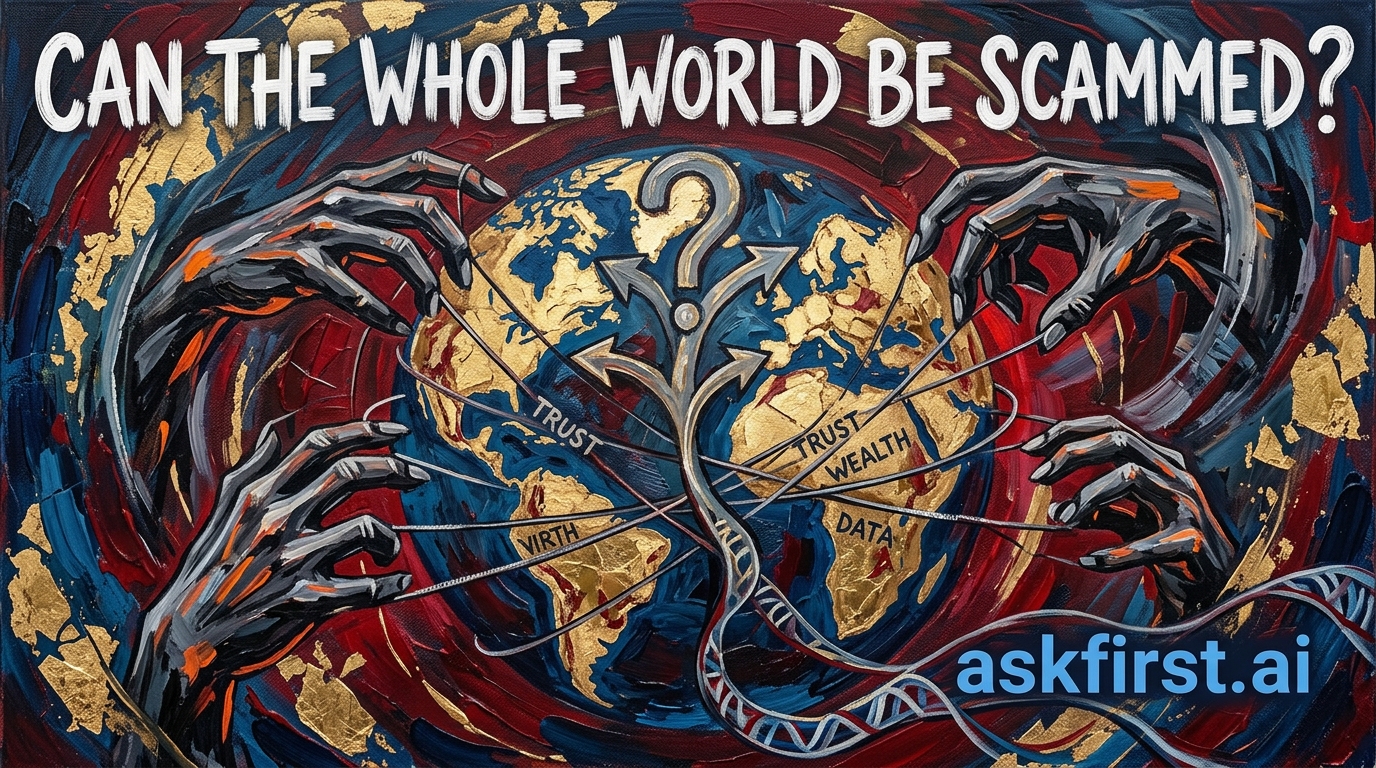
The concept of the "whole world" being scammed is a scenario that oscillates between philosophical thought experiment and tangible economic reality. While a singular, synchronized scam affecting every human being simultaneously is logistically improbable due to the fragmentation of global societies, languages, and technological access, the world is currently subject to systemic, large-scale deceptions that function with the same mechanics as individual fraud. To understand if the world can be scammed, one must examine the intersection of systemic risk, information asymmetry, and the vulnerabilities inherent in globalized infrastructure.
The Mechanics of Global-Scale Deception
At its core, a scam requires three elements: a perpetrator, a victim, and a mechanism of deception—usually involving a "too good to be true" proposition or a manufactured crisis. On a global scale, these elements evolve into complex phenomena such as systemic financial bubbles, misinformation cascades, and institutional failures.
Consider the 2008 Global Financial Crisis. While not a "scam" in the legal sense of a singular mastermind, it functioned as a collective deception. Financial institutions sold mortgage-backed securities characterized by obfuscated risk, essentially convincing the global market that toxic assets were "AAA" rated. When the world’s banking systems, pension funds, and individual investors bought into this narrative, the resulting collapse affected virtually every corner of the planet. This demonstrates that the world can be collectively misled if the deception is embedded within the foundational infrastructure of trust.
The Role of Information Asymmetry
The primary reason the world is susceptible to large-scale scams is information asymmetry. In a globalized digital economy, the average person is miles removed from the source of the data they consume. When algorithms dictate the flow of information, they create "reality tunnels." If a false narrative is injected into these tunnels with enough velocity and repetition, it can achieve a global consensus.
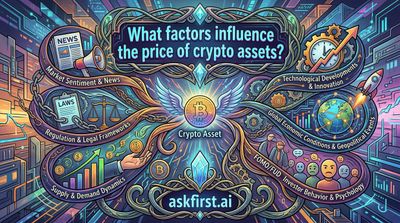
We see this in the proliferation of "get-rich-quick" schemes masked as revolutionary technology. Whether it is the speculative mania surrounding certain digital assets or the promise of "disruptive" platforms that lack underlying utility, these scams rely on the "Greater Fool Theory." When the global population is interconnected, the speed at which a false promise can propagate is instantaneous, creating a feedback loop where the perceived value of a scam rises simply because everyone else appears to be buying in.
Technological Vulnerabilities: The Digital Frontier
The digital age has introduced a new vector for global-scale fraud: infrastructure exploitation. If a bad actor were to compromise a foundational layer of the internet—such as a global domain name system (DNS) provider or a critical cloud computing backbone—they could theoretically redirect the world’s digital traffic.
Imagine a scenario where a high-level security breach allows for the mass dissemination of deepfake communications from world leaders or central banks. If the digital infrastructure that provides our "truth" is compromised, the world becomes a victim of a coordinated, global gaslighting event. Because we rely on digital interfaces for banking, news, and communication, the entire global population is effectively "logged in" to a system that is only as secure as its weakest link.
The "Sovereign" Scam: Institutional and Geopolitical Fraud
Beyond technology, there is the historical precedent of the "sovereign scam"—the manipulation of national currencies and state-backed promises. Throughout history, hyperinflation and the systematic devaluation of fiat currency have functioned as state-sponsored scams against the citizenry. When a government promises stability while secretly debasing the currency, the entire population is the victim of a long-term, systemic fraud. If this occurs across multiple major economies simultaneously, it creates a global economic trap where there is no "safe" asset for individuals to hold.
Cognitive Vulnerabilities and Human Nature
The ultimate reason the world remains susceptible to being scammed is not technological; it is evolutionary. Human psychology is hardwired for social proof—the tendency to look at what others are doing to determine correct behavior. Scammers exploit this by creating the illusion of consensus. If a scammer can convince a critical mass of influential figures and platforms that a fraud is legitimate, the rest of the world will follow suit, not because they have performed due diligence, but because they are biologically programmed to trust the herd.
Conclusion: Is Total Subjugation Possible?
Can the whole world be scammed? If we define "scammed" as the collective loss of truth, resources, or autonomy based on a false premise, then yes, the world is being scammed in increments every day.
However, a total, singular scam that wipes out the globe in one stroke is unlikely due to the chaotic nature of human competition. Fraudsters usually compete with one another, and their conflicting interests often expose the cracks in their respective deceptions. The greatest defense against a global scam is not a centralized authority, but the maintenance of decentralized, verifiable, and transparent systems. As long as there is friction in the transmission of information and a healthy skepticism of "consensus," the world remains difficult to control entirely. Yet, as our systems become more integrated and our reliance on digital intermediaries increases, the "attack surface" for a global-scale deception grows wider. Vigilance is no longer an individual responsibility; it is a prerequisite for the survival of the global status quo.