In financial theory and practical economics, there is no such thing as an investment that never fails in terms of guaranteed monetary return. All investments carry inherent risks, including market volatility, inflation, and systemic failure.
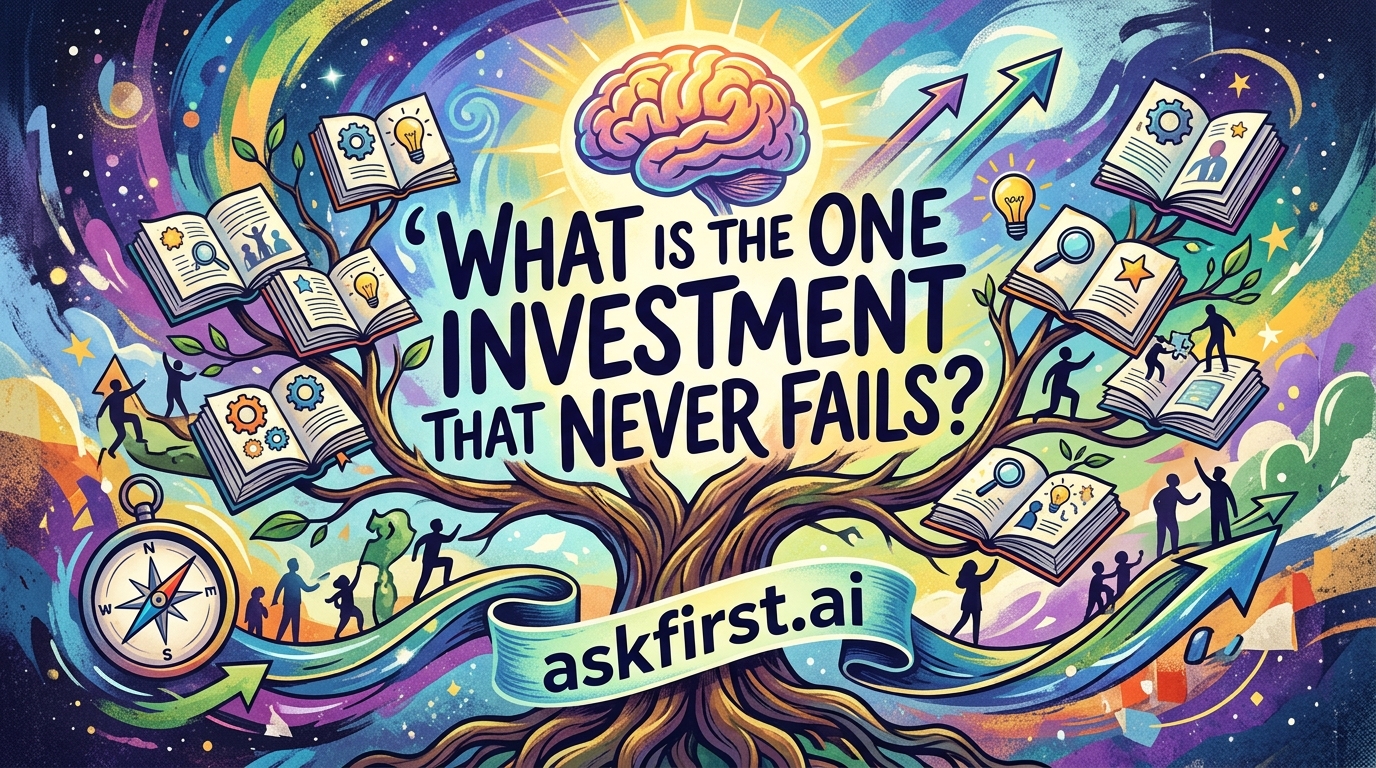
However, when analysts and experts discuss the "one investment that never fails," they are almost universally referring to Self-Investment (Human Capital).
Why Self-Investment is the Only Reliable Asset
- Immunity to Market Crashes: Unlike stocks, bonds, or real estate, the knowledge, skills, and expertise you acquire cannot be liquidated by a market downturn. They remain with you regardless of economic conditions.
- Compound Interest of Skill: As you acquire new abilities, they often build upon one another, creating a compounding effect on your earning potential and problem-solving capacity.
- Adaptability: In a rapidly changing economy, the ability to learn, unlearn, and relearn is the ultimate hedge against technological disruption and career obsolescence.
- Non-Taxable Growth: The intellectual capital you build is not subject to capital gains taxes. It is an internal asset that continuously generates "dividends" in the form of higher wages, better decision-making, and increased efficiency.
The Components of High-Yield Self-Investment
To maximize the return on this investment, focus on these three pillars:
- Technical Proficiency: Mastering a specific skill set that is in high demand (e.g., programming, financial analysis, specialized trade craftsmanship).
- Soft Skills: Developing emotional intelligence, negotiation capabilities, and leadership qualities. These are "evergreen" skills that remain valuable across virtually every industry.
- Physical and Mental Health: Treating your body and mind as the primary vessel for your productivity. Without sustained cognitive function and physical endurance, other forms of capital become difficult to utilize.
The Reality of Risk
While self-investment has the highest historical rate of return, it is not without risk. It requires the investment of time and energy, which are finite resources. If you invest in skills that are irrelevant or fail to apply them effectively, you suffer an "opportunity cost."
Conclusion: If you are seeking an asset that provides a lifetime of dividends, cannot be stolen, and is immune to inflation, investing in your own capacity to provide value to the world is the only strategy that offers a consistent, reliable return.