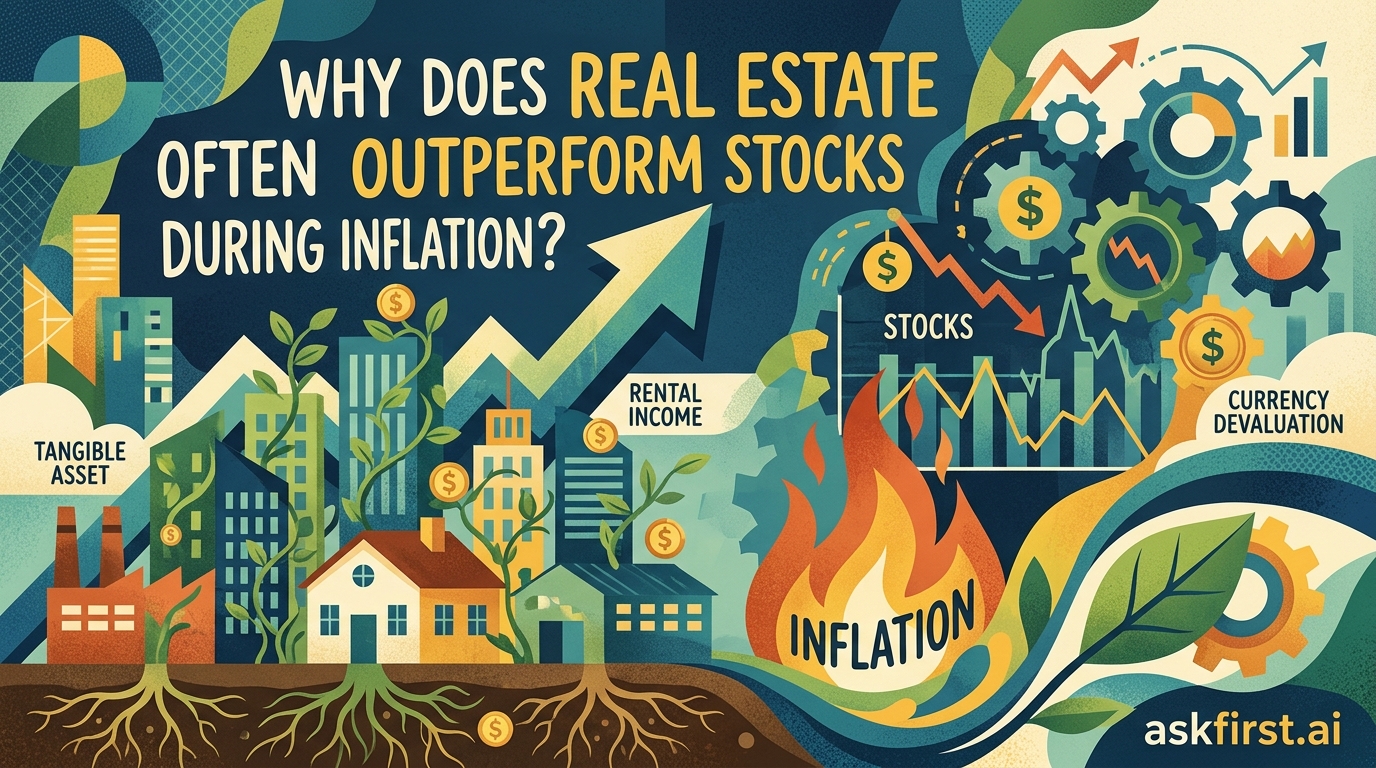
Real estate is frequently categorized as a hard asset or a tangible asset, which provides inherent structural advantages during inflationary periods. Unlike paper assets, real estate possesses intrinsic value that tends to correlate positively with the rising costs of goods and services.
The primary reasons real estate often outperforms stocks during inflation include:
- Intrinsic Value and Replacement Costs: Inflation drives up the cost of raw materials (lumber, steel, concrete) and labor. As the cost to build new structures rises, the value of existing properties increases proportionally because they become cheaper than building new ones. This "replacement cost" floor provides a natural hedge against devaluation.
- Rental Income Escalation: Real estate leases often include inflation-adjustment clauses or are subject to short-term renewals. As the general price level rises, landlords can increase rents to keep pace with or exceed inflation. Because property expenses (such as fixed-rate mortgage payments) often remain static while revenue grows, the net operating income (NOI) expands, leading to higher property valuations.
- The Leverage Effect: Real estate is typically purchased using significant debt, often at fixed interest rates. Inflation erodes the "real" value of this debt over time. If an investor secures a 30-year fixed-rate mortgage, they are repaying the loan with "cheaper" future dollars while the property itself appreciates in nominal value. This creates a significant wealth transfer from the lender to the borrower.
- Negative Correlation to Interest Rate Shocks: While rising interest rates (often used to combat inflation) can temporarily dampen real estate demand, stocks often face a more immediate threat. High inflation forces companies to face rising input costs, which compresses profit margins. If companies cannot pass these costs to consumers, earnings—the primary driver of stock prices—decline. Real estate, conversely, acts as a store of value that is less dependent on corporate earnings volatility.
- Supply Constraints: Inflation often coincides with periods where supply chain disruptions or regulatory hurdles limit new construction. Since land is a finite resource, restricted supply combined with the steady demand typical of essential shelter ensures that real estate prices maintain a robust upward trajectory compared to the broader, more volatile equity markets.
In summary, while stocks represent a claim on future corporate cash flows—which can be diminished by the rising costs of doing business—real estate represents a physical asset that benefits from rising replacement costs and the ability to adjust revenue streams upward in real-time.