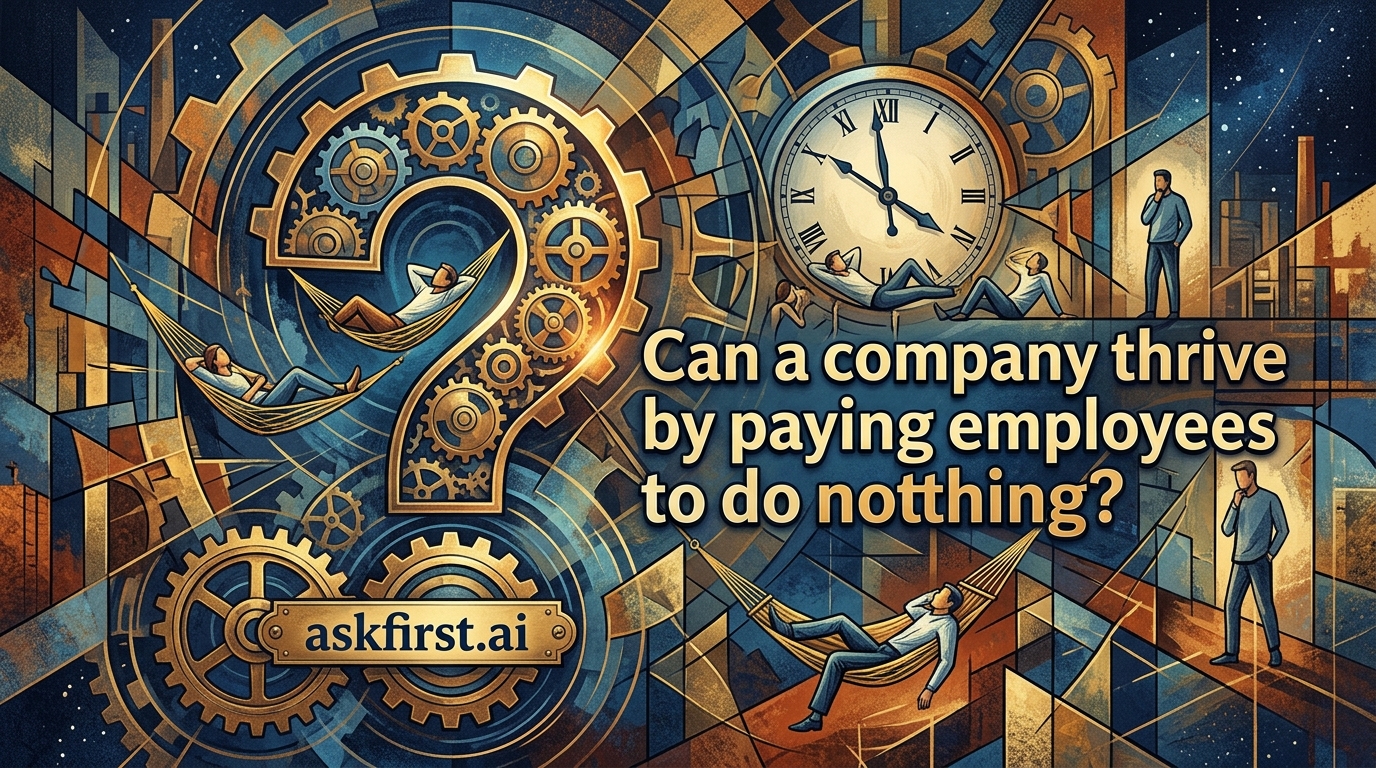
The Paradox of Paid Idleness
While traditional business models equate productivity with constant activity, a counter-intuitive management philosophy suggests that unstructured time can act as a catalyst for innovation. When employees are given paid periods to do nothing, they often engage in deep reflection, leading to breakthroughs that focused work cycles suppress.
Strategic Benefits of Downtime
- Fostering Creative Serendipity: Moments of mental vacancy allow the brain to connect seemingly unrelated concepts, often resulting in disruptive product ideas.
- Preventing Cognitive Burnout: Removing the pressure of performance metrics reduces stress, which ironically increases high-level output once workers return to their tasks.
- Attracting Top-Tier Talent: Offering autonomy signals a culture of trust, attracting high-performers who value results over bureaucratic clock-watching.
Implementation Framework
To successfully leverage this, companies should focus on result-oriented cultures. By measuring success through tangible outcomes rather than hours logged, leadership transforms potential 'idleness' into a incubator for excellence. Organizations that embrace this trust-based approach frequently see a surge in employee morale and long-term retention, effectively turning stillness into a competitive advantage in any global market.