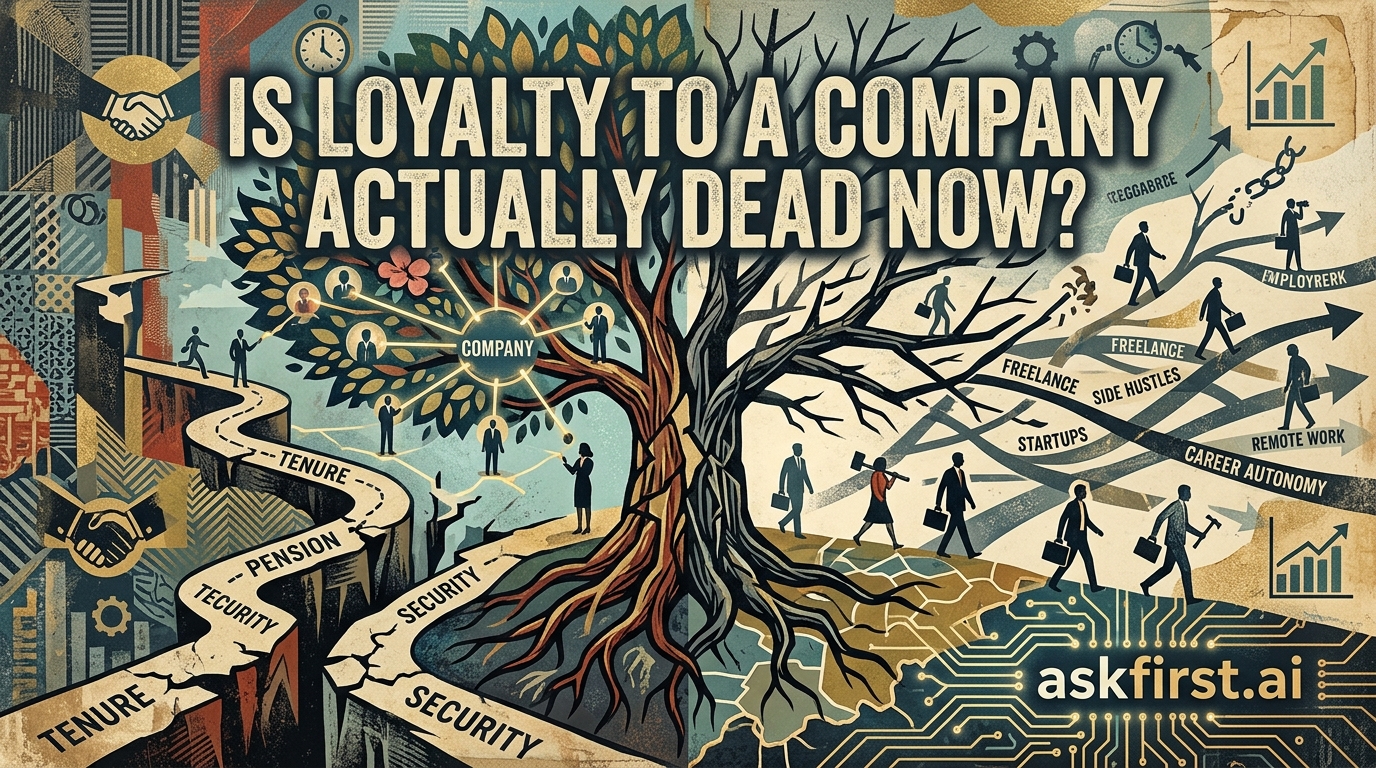
Whether loyalty to a company is "dead" is a subject of intense debate, but it is more accurate to say that the nature of loyalty has fundamentally shifted. The traditional model—where an employee gives decades of service in exchange for a pension and job security—has largely evaporated.
Here is a breakdown of why this perception exists and what is actually happening in the modern workforce:
1. The Death of the "Social Contract"
In the mid-20th century, companies practiced "paternalism." Employees were loyal because the company looked after them from hire until retirement. Today, that contract is broken:
- Corporate Restructuring: Frequent layoffs, mergers, and the prioritization of shareholder value over employee retention have signaled to workers that they are assets to be managed, not family members.
- The Rise of "At-Will" Employment: In many regions, the ease of firing employees has made long-term commitment feel like a one-sided risk for the worker.
2. The Rise of "Career Portfolio" Thinking
Modern professionals, particularly Gen Z and Millennials, increasingly view their careers as a portfolio of skills rather than a climb up a single ladder.
- Strategic Job Hopping: Data consistently shows that employees who change jobs every 2–3 years often see significantly higher salary growth than those who stay loyal to one firm.
- Skill Acquisition: If a company stops providing opportunities for growth, employees now feel empowered to leave to acquire those skills elsewhere.
3. Loyalty is Now "Reciprocal"
Loyalty isn't dead; it has simply become transactional and conditional. Employees are loyal to companies that:
- Invest in their development: Providing clear paths for advancement and learning.
- Offer flexibility: Remote or hybrid work arrangements are often viewed as a form of mutual respect.
- Align with values: Employees are more loyal to organizations that demonstrate ethical behavior and social responsibility.
4. Is it Actually Dead?
It depends on how you define it:
- Institutional Loyalty: Dead. Very few people expect to spend 30 years at one company anymore.
- Project/Team Loyalty: Alive and well. People are often deeply loyal to their immediate managers, their specific teams, or the impact of their work.
- Self-Loyalty: Thriving. The modern "loyalty" is to one’s own career trajectory, mental health, and financial security.
The Verdict:
Loyalty hasn't vanished; it has been de-risked. Companies that expect blind, long-term dedication without providing competitive pay, growth, and respect are finding that loyalty is indeed a relic of the past. Conversely, companies that treat employees as partners rather than commodities often find that people are more than happy to stay—as long as the relationship remains mutually beneficial.