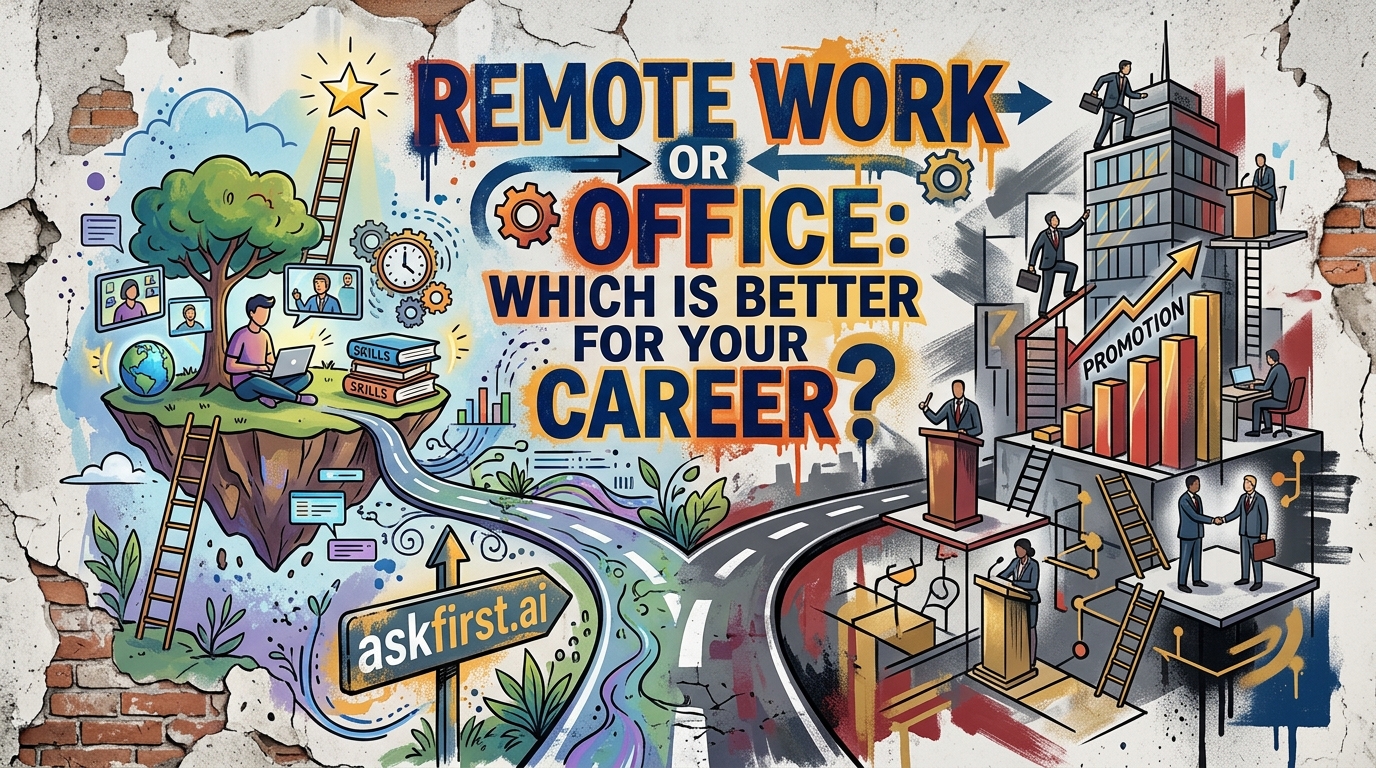
The debate between remote work and office-based work is complex, as the "better" choice depends heavily on your industry, personality, and career stage. Here is a breakdown of how each model impacts your professional growth.
The Case for Remote Work
Remote work offers unparalleled flexibility and access to a global job market, which can be a massive career accelerator for the right individual.
- Increased Productivity: For many, the lack of office distractions allows for "deep work," which can lead to higher-quality output and faster project completion.
- Global Opportunities: You are no longer tethered to a specific geographic location, allowing you to work for top-tier companies regardless of where you live.
- Work-Life Balance: By eliminating the commute, you gain time that can be reinvested into upskilling, professional certifications, or personal well-being, preventing burnout.
- Autonomy: Proving that you can deliver results without direct supervision is a highly valued trait that signals maturity and reliability to leadership.
The Case for Office-Based Work
For those early in their careers or in roles requiring high levels of collaboration, the office remains a powerful tool for professional advancement.
- Mentorship and Networking: It is significantly easier to learn through "osmosis" by watching senior leaders and engaging in casual, unplanned conversations that often lead to new opportunities.
- Visibility: "Proximity bias" is a real phenomenon; being physically present often keeps you top-of-mind for promotions, high-profile projects, and internal recognition.
- Collaborative Innovation: Complex problem-solving and brainstorming often happen more fluidly in person, where non-verbal cues and rapid whiteboard sessions can spark ideas faster than a video call.
- Company Culture: Being in the office helps you understand the nuances of organizational politics and culture, which are essential for navigating a career path within a specific company.
Which is better for you?
The "right" choice depends on your current goals:
- Choose Office Work if: You are in the early stages of your career, you are in a role that requires constant team synchronization, or you struggle with self-discipline and need a structured environment.
- Choose Remote Work if: You are an established professional with a strong internal network, your role is output-driven (coding, writing, analysis), or you value autonomy and the ability to design your own work-life integration.
The Verdict: The most successful professionals in 2026 are often adopting a Hybrid approach. This allows for the focused, independent work of a remote setting while ensuring you appear in the office for critical meetings, social bonding, and high-stakes collaboration.