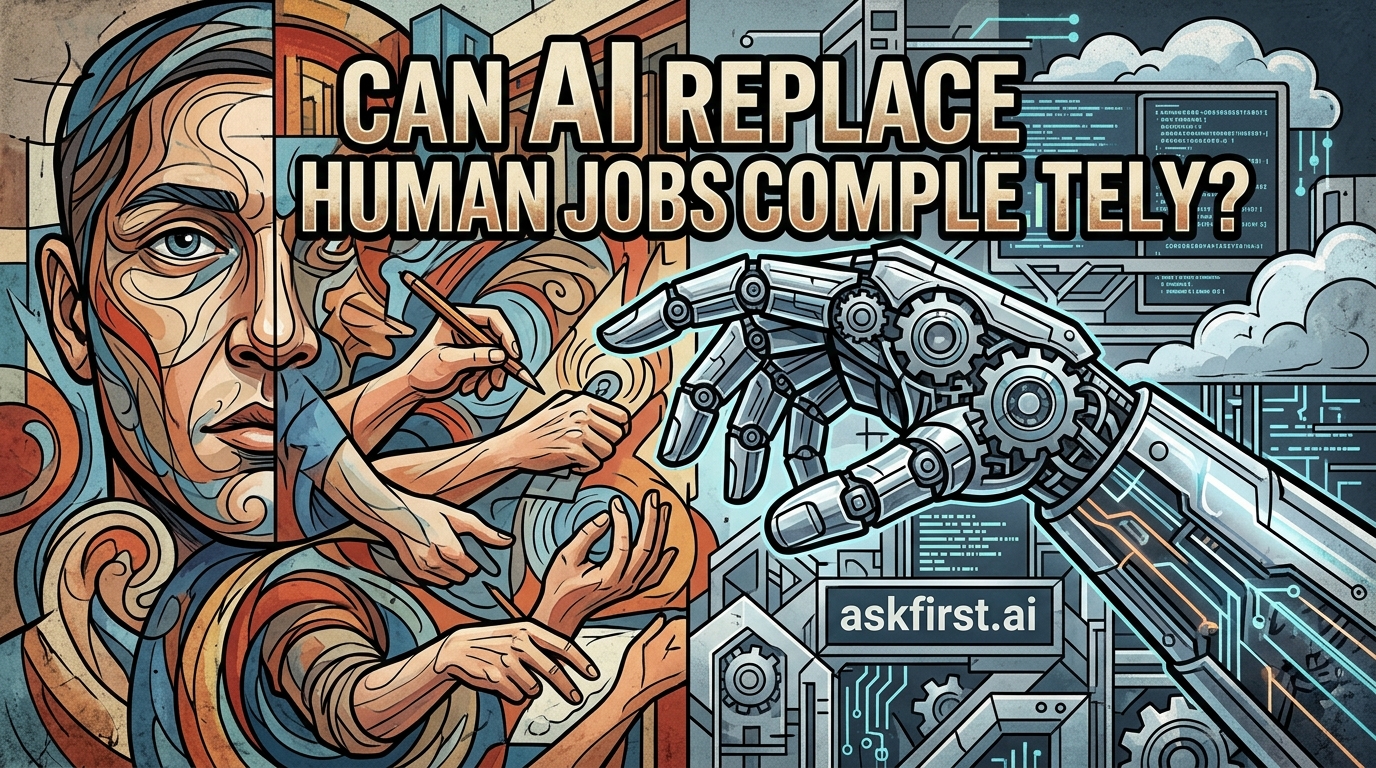
Whether AI can replace human jobs completely is a subject of intense debate among economists, technologists, and sociologists. Currently, the consensus is that while AI will transform the labor market, it is unlikely to replace human jobs in their entirety for the following reasons:
1. The Complementarity Effect
Most experts argue that AI is best suited for augmenting human capabilities rather than replacing them. AI excels at processing vast amounts of data, pattern recognition, and repetitive tasks, while humans excel at:
- Complex decision-making involving ethical considerations.
- Emotional intelligence (EQ) and genuine empathy, which are critical in fields like therapy, nursing, and leadership.
- Creative strategy and "out-of-the-box" thinking that requires human context and cultural nuance.
2. The "Human-in-the-Loop" Necessity
For high-stakes fields such as law, medicine, and engineering, human oversight remains indispensable. AI systems can hallucinate, exhibit bias, or fail when encountering edge cases. Having a human "in the loop" ensures accountability and provides the final judgment that AI cannot legally or ethically provide.
3. Emergence of New Industries
Historically, technological revolutions (like the Industrial Revolution or the Digital Revolution) have destroyed certain job categories but created entirely new ones that were previously unimaginable.
- AI-specific roles: We are already seeing a rise in demand for prompt engineers, AI ethics auditors, and model trainers.
- Human-centric services: As automation handles the mundane, the economy may shift further toward personalized, human-delivered experiences that AI cannot replicate, such as bespoke craftsmanship or high-touch personal coaching.
4. The Barriers to Total Replacement
- Economic Viability: In many cases, it is cheaper to hire a human than to develop, maintain, and power a specialized AI system for niche tasks.
- Regulation and Ethics: Governments may impose restrictions on AI adoption to prevent mass unemployment and protect social stability.
- Trust: In many sectors, humans prefer interacting with other humans. The "human touch" is a premium value proposition in luxury, care, and retail industries.
Conclusion
AI will likely replace tasks, not jobs. The most successful workers in the future will be those who learn to collaborate with AI tools to increase their productivity. Instead of being replaced by AI, professionals will likely be replaced by other professionals who know how to use AI effectively.
Ultimately, the future of work will be defined by human-AI partnership rather than total displacement.